How to choose a sleeping bag: a 5-step UK guide
5 November 2026 · 10 min read · Prices checked 31 October 2026
How to choose a sleeping bag
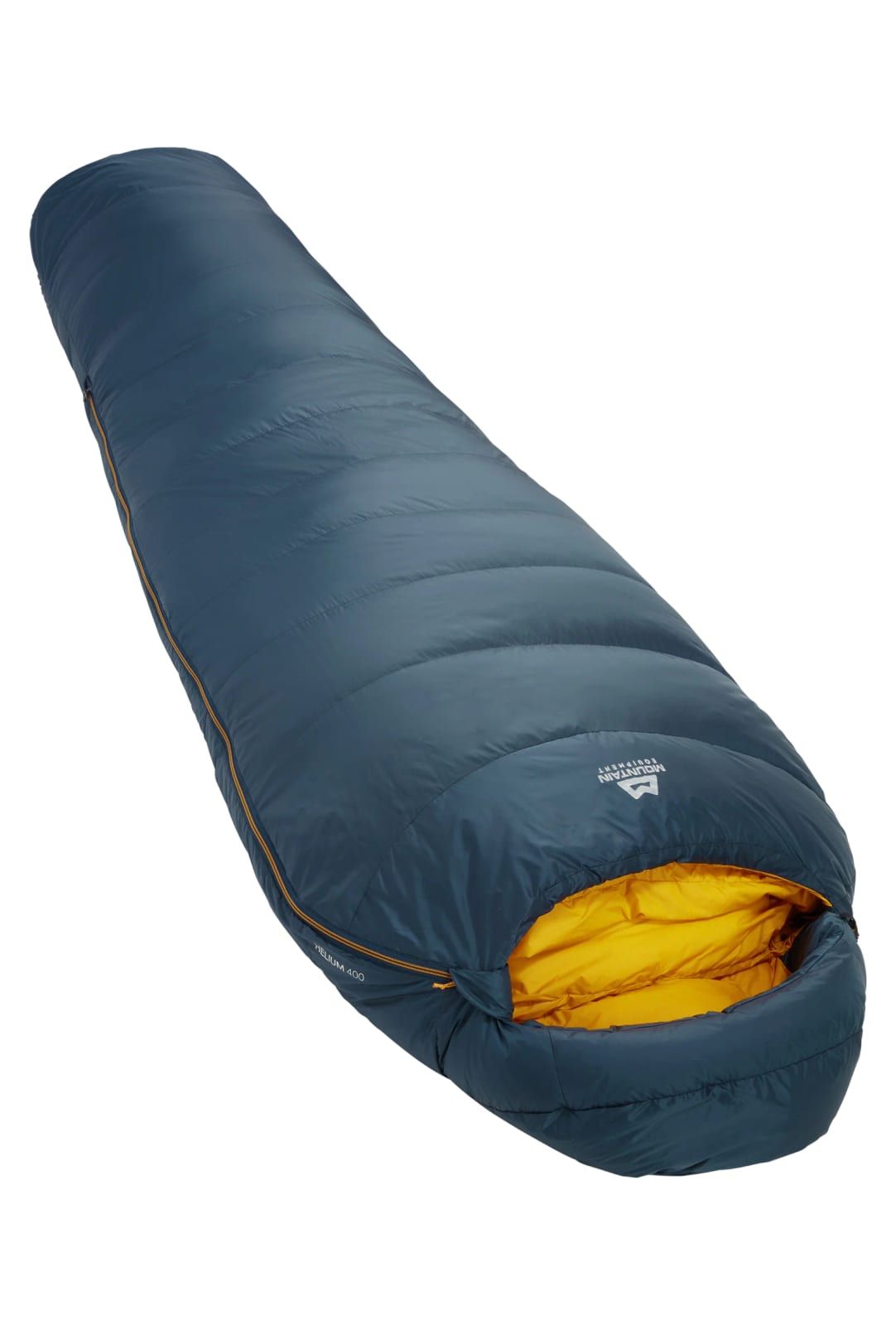
Most buying guides list features and stop. This one uses numbers: Met Office night temperatures, the lab ratings printed on bags, and the 47 sleeping bags we compare, so you know which rating, fill, shape, size and mat to buy.
Most guides on how to choose a sleeping bag list the same features and stop there. This one uses numbers: the Met Office's night-time temperatures, the lab ratings printed on bags, and the 47 sleeping bags we compare. Follow the five steps below and you'll know which rating, fill, shape and size to buy before you look at a single product.
How to choose a sleeping bag in 5 steps
- Find your coldest night. Work out the coldest month you'll camp in. In the UK, the average night-time low is about 4 °C in April and 1 °C in February.
- Pick a comfort rating about 5 °C below it. Use the lab-tested comfort figure, not the number in the bag's name.
- Choose down or synthetic. Down is lighter and packs smaller. Synthetic is cheaper and copes better with damp.
- Get the shape and length right. A mummy shape is warmest. Choose a length whose maximum height is above yours.
- Pair it with a warm enough mat. Look for an R-value of about 2 in summer, 2 to 4 from spring to autumn and 4 or more in winter.
What sleeping bag do I need?
Start with when and where you'll sleep. We took the Met Office's average overnight lows for 1991–2020 and chose a comfort rating about 5 °C below the coldest month in each range. That margin covers a colder-than-average night, a damp tent and a thin mat. Our 3 season sleeping bag guide shows the working.
| Your trips | Months | Choose a comfort rating of |
|---|---|---|
| Summer campsites and festivals | June to September | 4 °C or lower |
| Spring to autumn camping, Duke of Edinburgh, backpacking | April to October | -1 °C or lower (0 °C with a warm mat) |
| Early spring, late autumn or camping on hills | March to November | -3 °C or lower |
| UK winter camping | December to February | -5 °C or lower |
| Winter in the Scottish Highlands, or high camps | Winter | -10 °C or lower |
Two things push you further down the table. Height: the air cools by roughly 0.6 to 0.7 °C for every 100 m you climb. You: if you always feel the cold, choose a bag rated about 3 °C lower than the table says.
Sleeping bag temperature ratings: comfort, limit and extreme
Most bags sold in Europe are lab-tested. The test was EN 13537, which ISO 23537 replaced in 2016; the current edition is ISO 23537-1:2022. A heated mannequin is placed in the bag on a foam mat, and the lab works out three temperatures. EN 13537 defined them like this. When you're choosing a sleeping bag, the comfort rating is the one to compare.
| Rating | What it means | Use it for |
|---|---|---|
| Comfort | A standard woman (25 years old, 1.60 m, 60 kg) can expect to sleep comfortably lying relaxed | Choosing your bag |
| Limit | A standard man (25 years old, 1.73 m, 73 kg) curled up is just not feeling cold | Knowing how far you can push it |
| Extreme | A standard woman can stay in the bag for six hours without risk of death from hypothermia. Frostbite is still possible | Nothing. It's an emergency figure |
Not every bag is tested. Of the 47 sleeping bags we compare, 34 have a lab-tested comfort rating. The other 13 use the brand's own estimate or give no standard, and we label those "brand's own figure" so you can tell them apart.
2, 3 and 4 season sleeping bags in one minute
Season ratings are a British shorthand: 2 season for summer, 3 season for spring to autumn, 4 season for winter. No standard defines them, and every brand draws the lines differently. The bags we compare that are sold as plain "3-season" range from 5 °C to -5 °C comfort. Treat the season as a hint and buy on the comfort rating. Our 3 season guide and winter sleeping bags guide go into detail.
Down vs synthetic sleeping bags
To compare fairly, we took every bag we list with a lab-tested comfort rating of exactly 0 °C. Same warmth, very different bags:
| Bag | Fill | Weight | Packed size | From |
|---|---|---|---|---|
| Mountain Equipment Helium 400 | Down | 820 g | 24 × 21 × 20 cm | £240 |
| Rab Neutrino -6 °C | Down | 870 g | 18 × 30 cm | £401.76 |
| Decathlon MT900 0 °C | Down | 930 g | 11 L | £169.99 |
| Rab Radeon Synthetic -6 °C | Synthetic | 1,315 g | 22 × 40 cm | £142.16 |
| Decathlon MT500 0 °C | Synthetic | 1,450 g | 39 × 21 cm | £79.99 |
| Highlander Echo 250 | Synthetic | 1,700 g | 40 × 21 × 21 cm | £59.95 |
| Mountain Warehouse Summit 400 | Synthetic | 2,100 g | 40 × 26 × 26 cm | £34.99 |
| Decathlon Arpenaz 0 °C | Synthetic | 2,200 g | 29 L | £59.99 |
The down bags weigh 820 to 930 g and cost £170 to £402. The synthetic bags weigh 1,315 to 2,200 g and cost £35 to £142. The lightest down bag is 495 g lighter than the lightest synthetic one.
- Choose down if you'll carry the bag, want it to pack small, and can keep it dry. Fill power, measured by tests such as EN 12130, tells you how much the down lofts per gram: higher means warmer for the weight. For ethically sourced down, look for the Responsible Down Standard (RDS).
- Choose synthetic if your trips are often damp, you're on a budget, the bag will live in a car boot, or you want to wash it often. Compare them in our synthetic sleeping bags, or see our down sleeping bags.
Mummy vs rectangular sleeping bags
- Mummy: tapered to your shape with a hood. There's less air for your body to heat, so it's the warmest for its weight. Best for backpacking and cold nights.
- Semi-rectangular: a little more room to move, at the cost of some warmth. A good middle ground if you sleep on your side.
- Rectangular: roomy and often unzips to a quilt, but heavier and less warm for its weight. Fine for summer campsites and car camping. Some, like the Highlander Sleepline 250 Double, fit two people.
What size sleeping bag do I need?
Brands list a maximum user height for each size, and there's no shared standard. Ferrino's Regular mummy bags fit people up to 185 cm and its Long up to 200 cm. Therm-a-Rest's Regular is for 170 to 183 cm and its Long for 185 to 198 cm. Check the chart for the bag you're buying.
- Choose the size whose maximum height is above yours. Sea to Summit advises sizing up if you're at the limit of a Regular.
- Too short squashes the fill at your head and feet, and squashed fill doesn't insulate.
- Too long leaves extra air for your body to warm. Stuff spare clothes in the foot if you're between sizes.
- Women's versions are usually shorter. Compare them on the comfort rating, as you would any other bag.
Your sleeping mat matters as much as the bag
The ground draws heat out of you faster than the air, and the fill under you is squashed flat. That's why lab ratings are measured with the bag on a mat, and why the mat is the most overlooked part of how to choose a sleeping bag. Mat warmth is given as an R-value, and since 2019 most big brands test it the same way, to ASTM F3340-18. Therm-a-Rest's maker, Cascade Designs, suggests:
| When | R-value |
|---|---|
| Summer | 1 to 2 |
| Spring to autumn | 2 to 4 |
| Winter | 4 to 6 |
| High altitude | Higher |
R-values add up, so a foam mat under an air mat is a cheap way to make a summer mat work in winter. Mats without an ASTM R-value are only estimates.
Features worth paying for
Look for these
- A draught collarA padded tube around the neck that stops warm air escaping when you move. Most useful from autumn to spring.
- A shaped hood with a drawcordYour head loses a lot of heat. A hood you can close around your face makes a big difference on cold nights.
- A zip baffleA filled strip behind the zip that stops cold getting through it.
- A two-way zipLets you open the bottom to cool your feet without unzipping the whole bag.
- Left and right zipsTwo bags with opposite zips can often be joined into one, if you camp as a couple.
What you get for your money
We sorted the adult bags we compare with lab-tested ratings by their lowest UK price on 31 October 2026:
| Price | Bags | Warmest | Lightest rated 0 °C or colder |
|---|---|---|---|
| Under £60 | 8, all synthetic | Vango Nitestar Alpha 350, -1 °C | Highlander Echo 250, 1.7 kg |
| £60 to £150 | 9, 2 of them down | Decathlon MT500 -5 °C, -5 °C | Rab Radeon Synthetic -6 °C, 1.32 kg |
| £150 to £300 | 6, all down | Alpkit SkyeHigh 900, -6 °C | Alpkit PipeDream 400, 770 g |
| Over £300 | 9, all down | Alpkit PipeDream 600, -10.5 °C | Rab Neutrino -6 °C, 870 g |
Spending more mostly buys less weight, not more warmth. The Vango Nitestar Alpha 350 at about £40 is rated comfortable to -1 °C. The Rab Neutrino -6 °C at about £400 is rated to 0 °C, but it's 1,060 g lighter. If you won't carry your bag far, a cheap, heavy synthetic bag is often the best buy.
Choosing one as a present? Our sleeping bag gift guide turns these steps into a pick for every kind of camper.
Sleeping bag buying checklist
Before you buy
- Comfort rating about 5 °C below your coldest nightAnd about 3 °C lower again if you feel the cold.
- A lab-tested ratingISO 23537 or EN 13537, not just the brand's own figure.
- The comfort figure, not the nameMany bags are named after the limit rating.
- Down if you carry it, synthetic if it's damp or on a budget
- A mummy shape for cold nights
- A size whose maximum height is above yours
- A mat with the right R-value for the season
Frequently asked questions
What sleeping bag do I need for camping in the UK?+
For most camping from April to October, choose a bag with a lab-tested comfort rating of -1 °C or lower, or 0 °C with a warm mat. For summer only, 4 °C is enough. For winter, choose -5 °C or lower.
What tog sleeping bag do I need for camping?+
Adult camping sleeping bags aren't rated in tog. Tog is used for duvets and baby sleeping bags. For camping, compare the ISO 23537 or EN 13537 comfort rating in °C.
Is a 2 season sleeping bag warm enough for a UK summer?+
Usually, yes, from June to September at low level. Choose one with a comfort rating of about 4 °C or lower. Camping on hills, or in early June or late September, can need a warmer bag.
Do sleeping bag liners add warmth?+
A little. There's no standard test for liners. Sea to Summit estimates its liners add up to 4 to 8 °C at best, with a suitable bag and mat. Treat a liner as a small bonus, not a substitute for the right bag.
Can you wash a down sleeping bag?+
Yes. Rab advises a non-biological detergent, a gentle cycle with an extra rinse, and no fabric softener. Then tumble dry on low heat, which can take 2 to 4 hours, turning the bag over so the down dries evenly.
What should I do if I always feel the cold?+
Choose a bag rated about 3 °C lower than you'd otherwise need, use a warmer mat, and wear a hat and dry layers to bed. The comfort rating is based on a standard woman sleeping relaxed, so it's a fair starting point if you feel the cold.
Is a more expensive sleeping bag warmer?+
Not necessarily. In our comparison, a £40 bag and a £400 bag are both rated comfortable to around 0 °C. The extra money mostly buys lighter weight and a smaller pack size, usually from down fill.
How do I choose a sleeping bag for backpacking?+
Follow the same steps, then weigh up weight and pack size. A down mummy bag is usually best. In our comparison, the lightest bags rated comfortable to 0 °C weigh 820 to 930 g, against 1,315 g for the lightest synthetic one.
Should I buy a mummy or a rectangular sleeping bag?+
A mummy bag for backpacking and cold nights, because it's warmer for its weight. A rectangular bag for summer campsites and car camping, where room to move matters more than weight.
That's how to choose a sleeping bag: the right comfort rating first, then fill, shape, size and mat. When you're ready to shop, compare every bag side by side in our sleeping bag comparison, see our picks in the best sleeping bags for the UK, or browse by brand.
Sources
- 1UK and regional series: mean daily minimum temperature (Met Office)
- 2EN 13537 (Wikipedia)
- 3ISO 23537-1:2022 Requirements for sleeping bags (ISO)
- 4Sleeping bag temperature ratings explained (Rab)
- 5How to wash a sleeping bag (Rab)
- 6The ASTM R-value standard: rating sleeping pad insulation (Cascade Designs)
- 7Ranking sleeping pads by R-value, citing Cascade Designs' seasonal ranges (Yamatomichi)
- 8Adding warmth with a liner (Sea to Summit)
- 9I'm at the height limit for a Regular sleeping bag. Should I size up? (Sea to Summit)
- 10Sleeping bag size guide (Ferrino)
- 11Therm-a-Rest sleeping bag size chart (evo)
- 12New EN fill power standard, EN 12130:2018 (IDFL)
We may earn a commission when you buy through links on this page, at no extra cost to you. It never changes what we recommend. How we test