3 season sleeping bag guide: what 2, 3 and 4 season really mean
4 November 2026 · 12 min read · Prices checked 31 October 2026
What 3 season really means
"3-season" is printed on bags rated comfortable at 5 °C and on bags rated to -5 °C. We matched every season to Met Office night temperatures, checked 12 bags sold as 3-season against their lab ratings, and picked the ones that really cover spring to autumn.
Walk into any British outdoor shop and the first question is "how many seasons?" It sounds like a rating. It isn't. A 3 season sleeping bag can be rated comfortable at 5 °C or at -5 °C, depending on who made it and who's selling it. That 10 °C gap is the difference between a good night in October and lying awake shivering in April.
So we did the obvious thing nobody seems to have done. We took the Met Office's overnight lows for every month, worked out the comfort rating each season actually needs, and checked it against the bags we compare. Here's what 2, 3 and 4 season should mean, and which bags live up to the label.
The best 3 season sleeping bags at a glance
What do 2, 3 and 4 season mean?
Season ratings are a British and European shorthand for when you can use a bag. The idea is simple: a 2 season bag is for summer, a 3 season bag for spring to autumn, and a 4 season bag for winter. The problem is that no standard defines them. Alpkit says so plainly in its own guide, and every brand draws the lines in a slightly different place.
What is standardised is the temperature rating. For about 20 years, bags sold in Europe have been lab-tested to EN 13537, which ISO 23537 replaced in 2016. A heated mannequin is put in the bag on an insulated mat, and the lab works out three temperatures:
- Comfort: the lowest temperature at which a typical person who feels the cold sleeps comfortably, lying relaxed. This is the number to buy on.
- Limit: the lowest temperature at which a typical person who feels the cold less sleeps for eight hours curled up. You'll be cold, but you'll sleep.
- Extreme: a survival figure, the risk point for hypothermia. Never plan around it.
What temperature is each season in the UK?
We used the Met Office's average overnight lows for 1991–2020 and the same rule of thumb as our winter guide: choose a comfort rating about 5 °C below the average low for the coldest month you'll camp in, rounded to the safe side for winter. That margin covers a colder-than-average night, a damp tent and a thin mat.
| Season | Months | Coldest average low | Choose a comfort rating of | Lab-rated bags we compare that qualify |
|---|---|---|---|---|
| 2 season | June to September | 9.0 °C (September) | 4 °C or lower | 24 of 33 |
| 3 season | April to October | 3.8 °C (April) | -1 °C or lower | 11 of 33 |
| 3 season plus | March to November | 2.2 °C (March) | -3 °C or lower | 9 of 33 |
| 4 season | December to February | 1.1 °C (February) | -5 °C or lower | 8 of 33 |
| Highland winter | Winter in northern Scotland, or high camps | 0.1 °C (February, northern Scotland) | -10 °C or lower | 3 of 33 |
Three things move these numbers. Height: the air cools by roughly 0.6 to 0.7 °C for every 100 m you climb, so a camp at 600 m runs about 4 °C colder than the valley. Where you are: northern Scotland's spring and autumn nights are about 1 to 1.5 °C colder than the UK average. You: if you always feel the cold, choose a bag rated about 3 °C lower than the table.
The 10 °C problem with "3 season"
Of the 33 bags we compare with a lab-tested comfort rating, 12 are sold as plain "3-season" by the maker or UK retailers. Their comfort ratings run from 5 °C to -5 °C. Seven of the 12 aren't rated comfortable even at 0 °C, and only one meets our full April-to-October bar of -1 °C.
| Bag | Comfort rating | Covers |
|---|---|---|
| Decathlon MT500 -5 °C | -5 °C | All year in the lowlands |
| Decathlon MT500 0 °C | 0 °C | May to October |
| Decathlon MT900 0 °C | 0 °C | May to October |
| Decathlon Arpenaz 0 °C | 0 °C | May to October |
| Rab Radeon Synthetic -6 °C | 0 °C | May to October |
| Mountain Equipment Klimatic III | 1 °C | May to October |
| Vango Nitestar Alpha 250 | 2 °C | June to September |
| Vango Atlas 350 Quad | 2 °C | June to September |
| Vango Mantis 300 | 3 °C | June to September |
| Mountain Warehouse Summit 250 | 5 °C | July and August |
| Decathlon MT500 5 °C | 5 °C | July and August |
| Decathlon MT900 5 °C | 5 °C | July and August |
None of these is a bad bag. A 5 °C bag is a lovely thing in July, but by our rule it's really a July-and-August bag. But "3-season" tells you almost nothing on its own: Decathlon sells bags rated at 5 °C, 0 °C and -5 °C, and calls all three 3-season. The comfort rating is what separates them.
How we chose
We haven't slept in every bag. For our picks we only used bags with a published ISO 23537 or EN 13537 comfort rating of 0 °C or lower, so every one covers at least May to October, and April with a warm mat. Then we compared weight, fill and the cheapest UK price we found on 31 October 2026, and read independent reviews where they exist. How we test explains the rest.
The best 3 season sleeping bags for the UK
Best overall
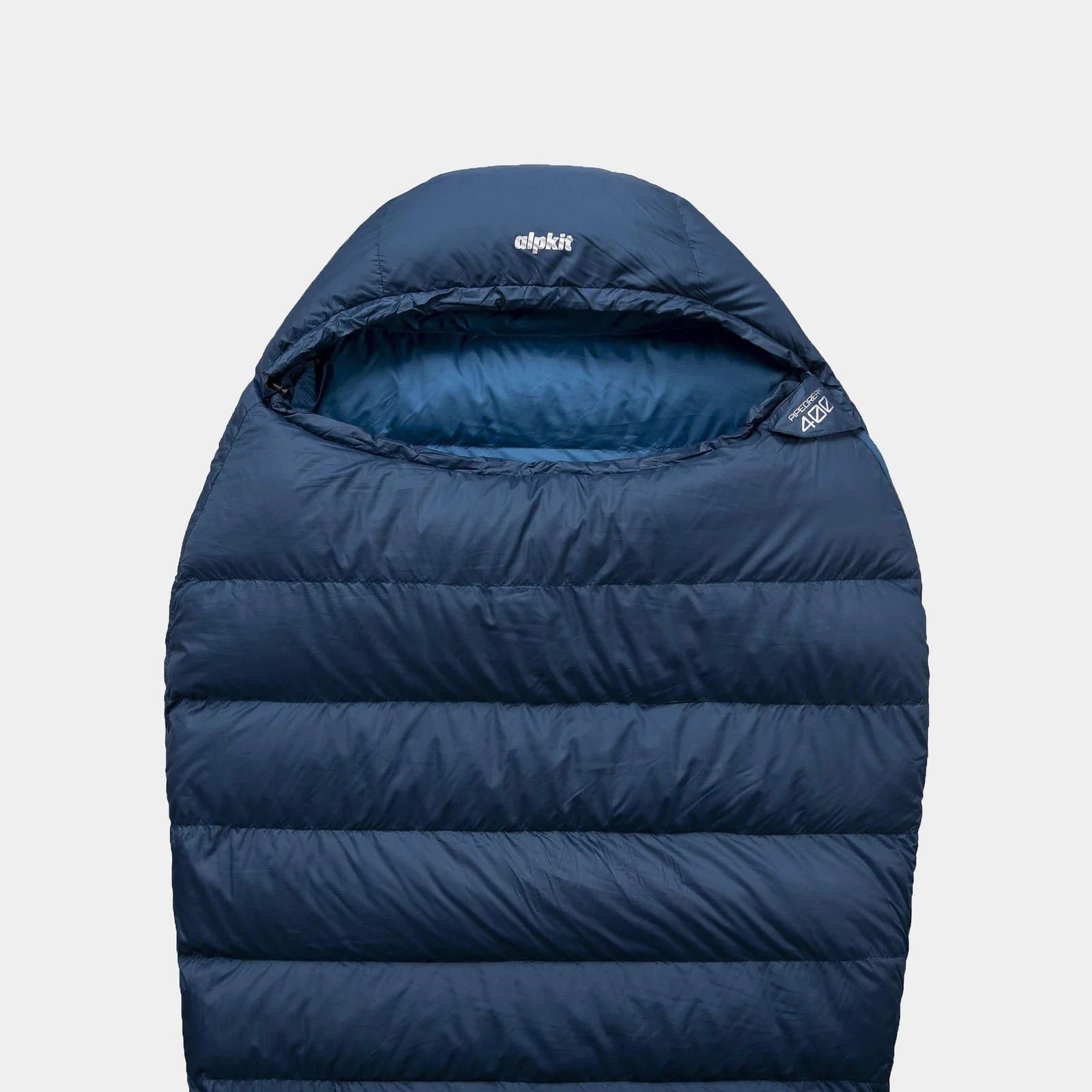
Alpkit PipeDream 400
- Warmth
- Comfort -4.2 °C
- Weight
- 770 g
- Packed size
- 25 × 18 cm
- Fill
- 750 FP duck down, 400 g fill
The PipeDream 400 is one of the few bags that's 3 season by any definition. Its EN comfort rating is -4.2 °C, which clears even our March-to-November bar, yet it weighs only 770 g and packs to 25 × 18 cm. The 750 fill-power duck down has a PFC-free water-resistant treatment, which helps with condensation in a British tent, and the full-length zip has a baffle along it.
Reasons to buy
- Light and warm for the weight, packs down very small
- Excellent value for a hydrophobic, RDS-certified down bag
- Soft, comfortable fabric and good warmth for its weight
Reasons to avoid
- Regular length runs short; Advnture suggests Long for anyone over about 185 cm
- Single front-only shoulder baffle and no women's-specific version
The bag we'd choose for spring-to-autumn camping and backpacking. It's only sold by Alpkit, and the Regular runs short, so go Long if you're over about 185 cm.
Best value down
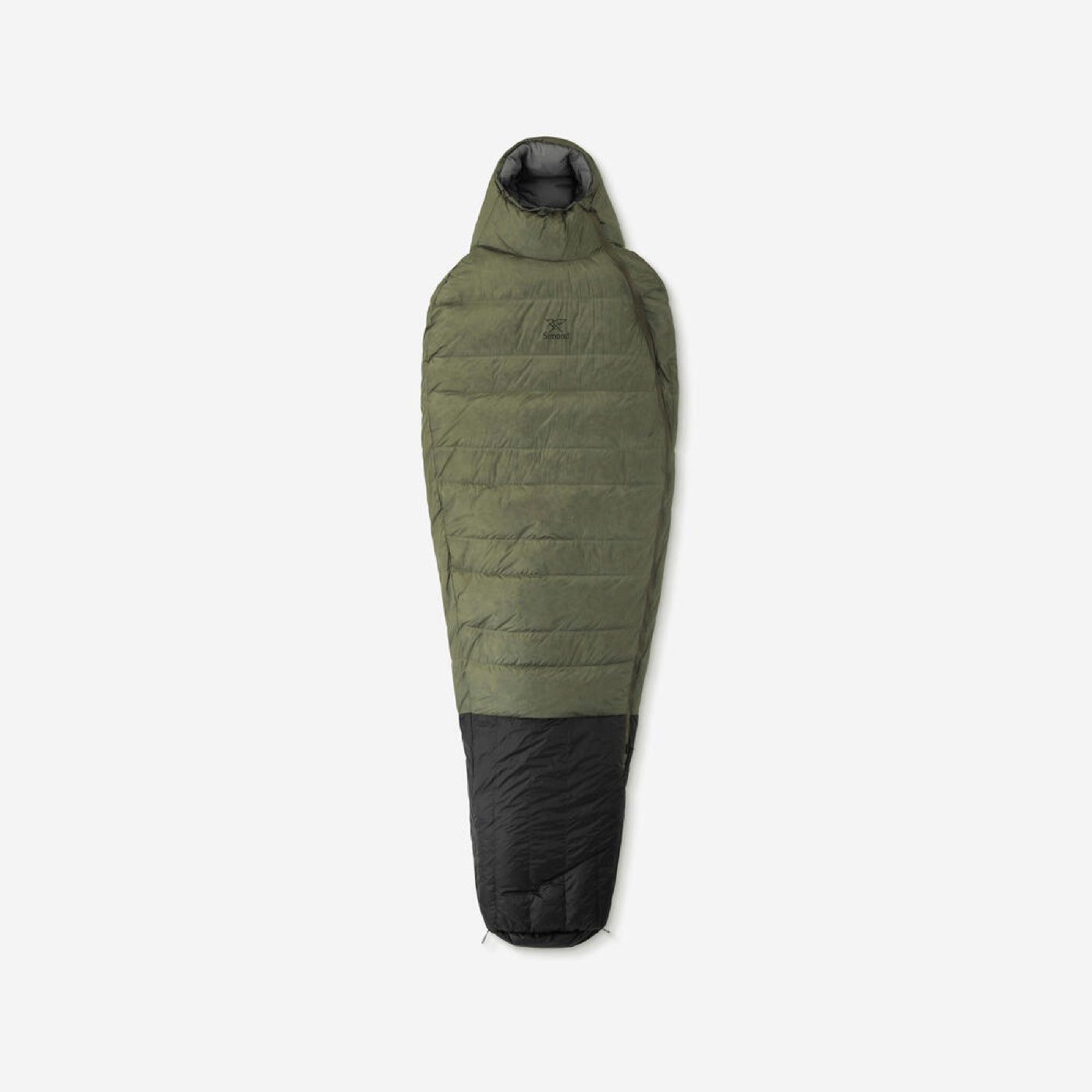
Decathlon Simond MT900 0 °C Down
- Warmth
- Comfort 0 °C
- Weight
- 930 g
- Packed size
- 11 L uncompressed
- Fill
- 800 FP down, 495 g fill
Decathlon publishes everything we'd want to know: an ISO comfort rating of 0 °C, 495 g of 800 and 700 fill-power down, and a weight of 930 g, all for about £170. That's around £100 less than our top pick for a bag that covers May to October.
Reasons to buy
- Published fill weight, fill power and independent lab rating at this price
- Generous ~72 cm shoulder width for a mummy, full-length draught baffle
Reasons to avoid
- Heavier than premium down bags of similar rating
- Needs an R4.8 mat to reach its rating; no neck baffle reported
A strong first down bag. It's 160 g heavier than the PipeDream and 4 °C less warm, and Decathlon says it needs a well-insulated mat to reach its rating, so pair it with a good one.
Best from UK shops
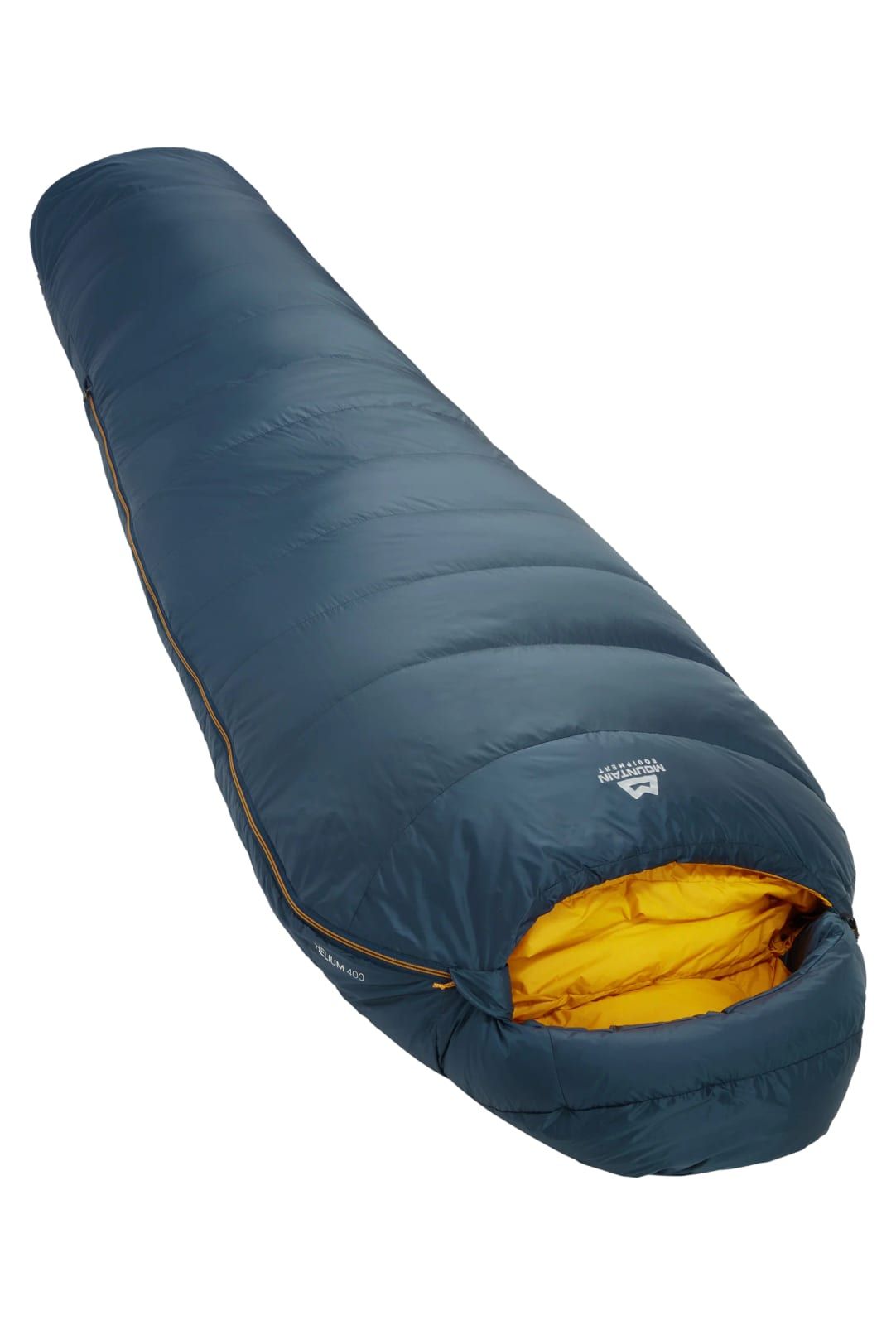
Mountain Equipment Helium 400
- Warmth
- Comfort 0 °C
- Weight
- 820 g
- Packed size
- 24 × 21 × 20 cm
- Fill
- 700 FP duck down, 403 g fill
If you'd rather buy from a shop you know, the Helium 400 is stocked by Trekitt, Cotswold Outdoor and Mountain Equipment itself. It has an ISO comfort rating of 0 °C at 820 g, with 700 fill-power duck down and box-wall baffles. Reviewers like the magnetic hood closure, which works one-handed with gloves on.
Reasons to buy
- Good balance of warmth, weight and value
- Magnetic Lode Lock hood/collar closure works one-handed and with gloves
- Smooth, well-baffled side zip and box-wall construction with no reported cold spots
Reasons to avoid
- Slim alpine fit may not suit larger builds
- Duck rather than goose down, and no hydrophobic treatment
A dependable, light 3 season bag at about £240. The slim alpine cut won't suit broad shoulders, and the down isn't water-resistant, so keep it dry.
Best synthetic for damp trips
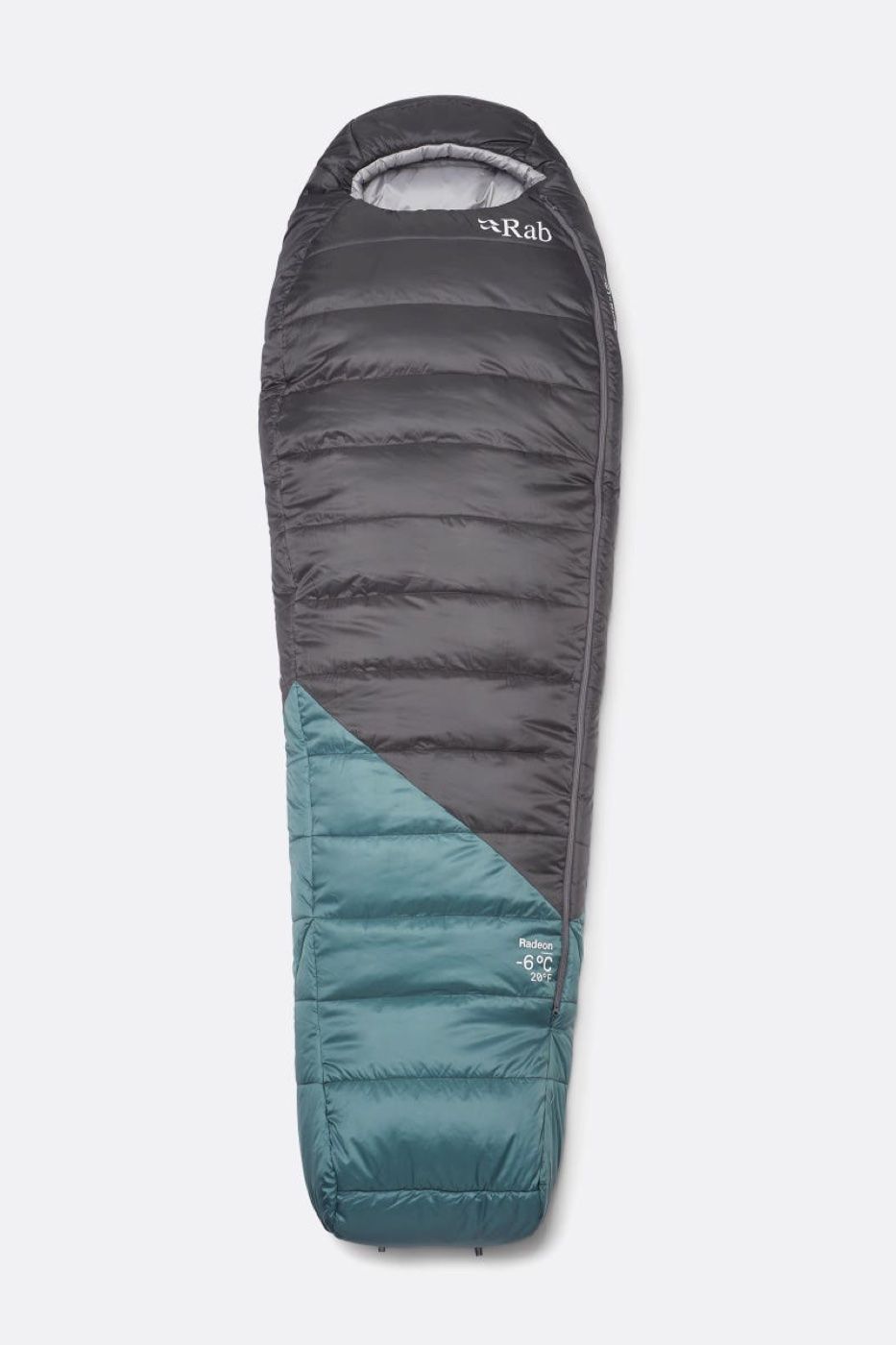
Rab Radeon Synthetic -6 °C
- Warmth
- Comfort 0 °C
- Weight
- 1.31 kg
- Packed size
- 22 × 40 cm
- Fill
- Recycled Stratus synthetic sheet insulation in a WARM WAVE…, 909 g
Synthetic insulation keeps working when it's damp, which matters on a wet weekend in the Lakes. The Radeon has an ISO comfort rating of 0 °C and Rab's Stratus sheet insulation, which it says "continues to insulate when damp and dries quickly". The 3/4 zip and sidewall baffles suit side sleepers.
Reasons to buy
- Stratus synthetic 'continues to insulate when damp and dries quickly', which suits condensation-heavy UK camping
- The 3/4-length zip gives good temperature control, and the cut is 'generous without feeling restrictive'
- Sidewall baffles help side sleepers
Reasons to avoid
- At about 1.3 kg it 'sits heavier than down alternatives'
- New 2026 model with no independent editorial review found; the verdict above is a retailer's
The one to pick if your trips are usually wet, at about £142. At 1.3 kg it's heavier than the down bags, and it's a new model with no independent review yet.
Best budget
Vango Nitestar Alpha 350
- Warmth
- Comfort -1 °C
- Weight
- 1.93 kg
- Packed size
- ≈ 30 × 22 cm, per Attwoolls
- Fill
- Vango Insulite Alpha, offset double-layer construction
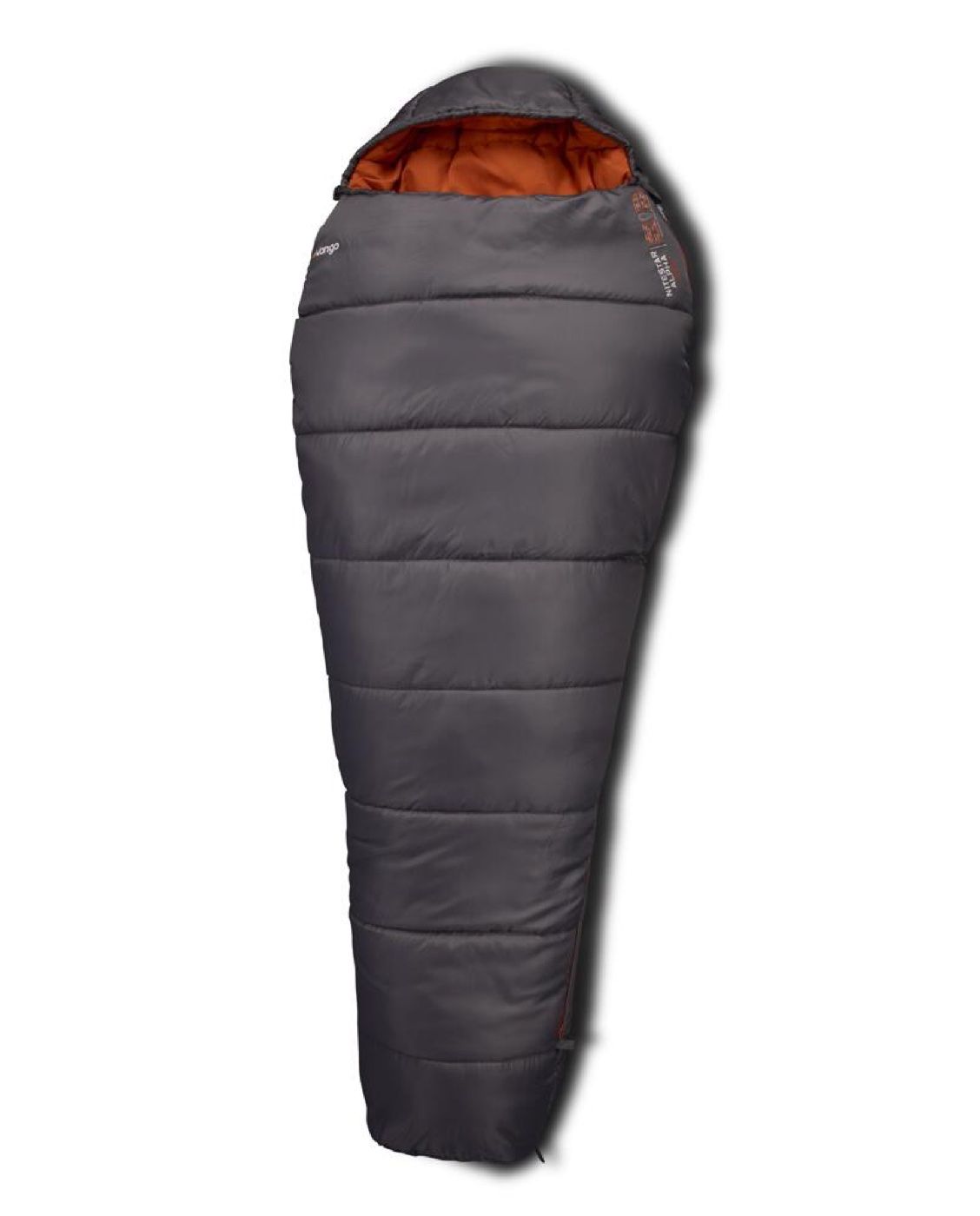
At about £40, the Nitestar Alpha 350 is the cheapest bag we compare that's genuinely 3 season: its ISO comfort rating is -1 °C, enough for April to October. It's widely stocked by UK camping shops and uses Vango's offset double-layer fill, which avoids cold spots along the stitching.
Reasons to buy
- ISO 23537-1:2022 lab-tested comfort -1°C / limit -7°C for around £40-50 street price - the warmest bag in this set per…
- Same DofE Recommended Nitestar Alpha platform as the 250: offset double-layer construction, insulated shoulder and zip…
- Widely stocked by independent UK camping retailers at well under RRP
Reasons to avoid
- 1.93 kg is heavy for backpacking and DofE carrying; Advnture's review of the smaller Nitestar 150 notes the synthetic…
- No independent editorial review of the 350 found; Vango direct is out of stock until February 2027
Ideal for car camping, family trips and campsites. At 1.93 kg it's too heavy and bulky to carry far, so backpackers should look at the Decathlon MT500 0 °C instead.
Best for March, November and hills
Decathlon Simond MT500 -5 °C
- Warmth
- Comfort -5 °C
- Weight
- 1.65 kg
- Packed size
- 41 × 23 cm
- Fill
- Silicone-coated spiral polyester fibre wadding
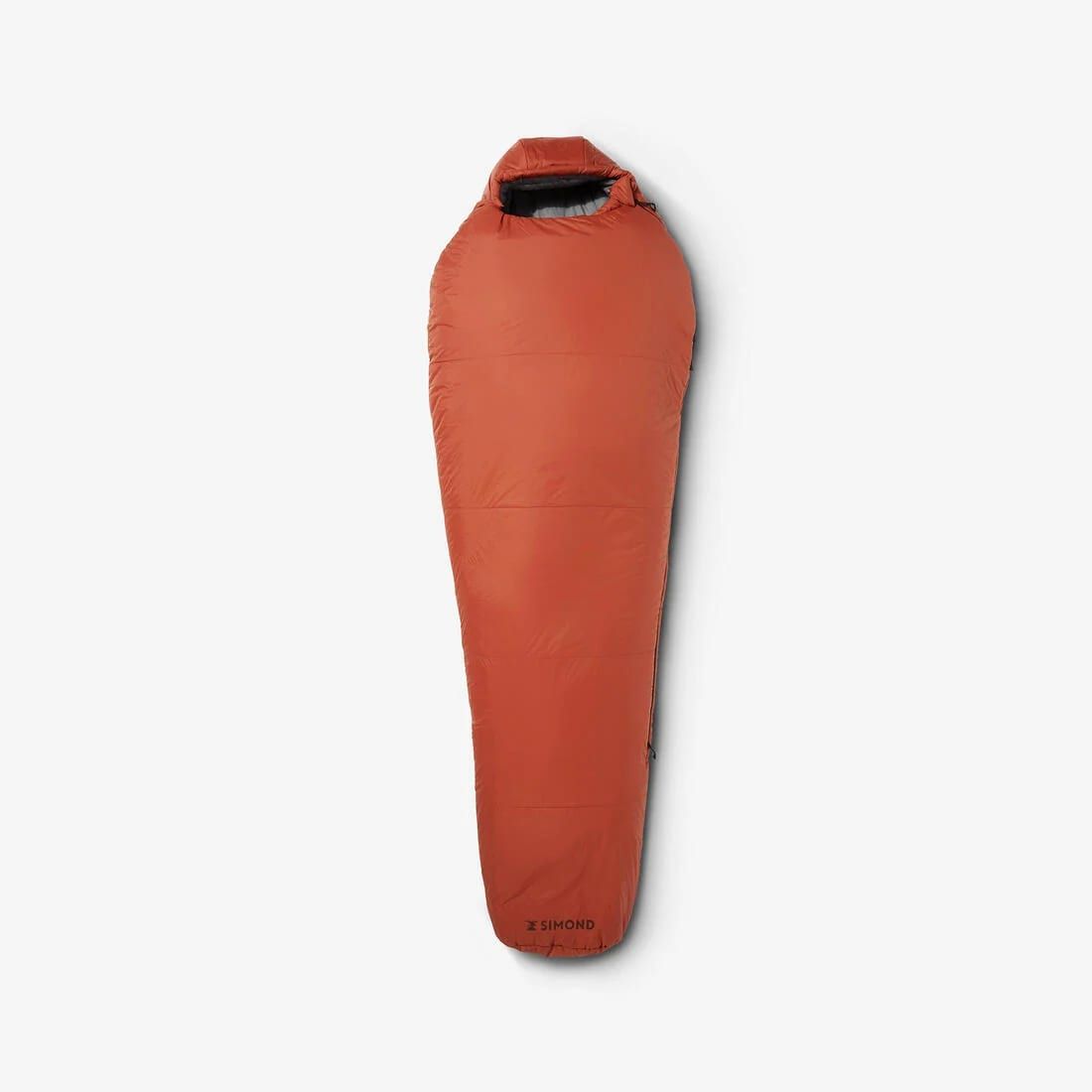
Decathlon calls this 3-season, and its ISO comfort rating of -5 °C means it really is, even for the cold ends of the year and camps on high ground. That's the same rating as the Rab Ascent -12 °C for about £80. The synthetic fill copes well with damp.
Reasons to buy
- Warm with no cold spots even when partly wet
- Large shoulder baffle and soft fabric; robust and reliable
- Very low price for a -5°C comfort bag
Reasons to avoid
- Heavy and bulky at 1650 g / 16 L for size L
- Advnture test may be an earlier MT500 -5°C version
The cheapest way to stretch your season into March and November, or to camp on the tops. At 1.65 kg and 16 litres packed, it's for car boots and short walk-ins rather than long trails.
| Bag | Best for | Warmth | Weight | Best price |
|---|---|---|---|---|
| Alpkit PipeDream 400 | Best overall | Comfort -4.2 °C | 770 g | £274.99 at Alpkit |
| Decathlon Simond MT900 0 °C Down | Value down | Comfort 0 °C | 930 g | £169.99 at Decathlon |
| Mountain Equipment Helium 400 | UK shops | Comfort 0 °C | 820 g | £240 at Trekitt |
| Rab Radeon Synthetic -6 °C | Damp trips | Comfort 0 °C | 1.31 kg | £142.16 at Alpinetrek |
| Vango Nitestar Alpha 350 | Budget | Comfort -1 °C | 1.93 kg | £39.95 at Attwoolls Outdoors |
| Decathlon Simond MT500 -5 °C | March to November | Comfort -5 °C | 1.65 kg | £79.99 at Decathlon |
Which season bag do you need?
- Festivals and summer campsites: a 2 season bag rated about 4 to 5 °C is plenty for June to September. See our synthetic bags for cheap, washable options.
- Duke of Edinburgh and school trips: most expeditions run from spring to autumn, so choose -1 °C comfort, or 0 °C with a warm mat. Weight matters if you're carrying it, so compare the weights before you buy.
- Backpacking and wild camping: 0 °C for May to October, -3 °C if you go in March, November or camp high. Down saves weight; compare in our down bags.
- Car camping and family trips: weight doesn't matter, so a heavy, cheap synthetic bag at 0 °C or lower is the best value.
- Winter camping: you need a 4 season bag at -5 °C or better. Our winter sleeping bags guide has the picks.
Is a 3 season sleeping bag warm enough for winter?
Usually not. The average UK winter low is about 1 °C, so you want -5 °C comfort for a margin. A typical 0 °C bag will keep you alive on a mild winter night but not comfortable. The exceptions are the warmest "3-season" bags, like the Decathlon MT500 -5 °C, which are winter bags in all but name.
If you only camp in winter once or twice a year, layering can bridge a small gap. A warmer mat, a down jacket and a liner might add a few degrees, but liner warmth claims aren't tested to any standard, so don't count on more than that.
Get more from a 3 season bag
Sleep warmer in spring and autumn
- Match your mat to the seasonEvery ISO rating assumes an insulating mat. As a rough guide, use R2 or more in summer, R3 or more in spring and autumn and R4 or more in winter.
- Pitch out of the wind and off the valley floorCold air sinks and collects in hollows on still nights. A spot a little up the slope can be noticeably warmer.
- Go to bed warm and fedYour body makes the heat; the bag only keeps it. Eat something and warm up before you get in.
- Wear a hat and dry layersChange out of the day's damp clothes. Dry socks and a hat make a big difference at 3 am.
- Vent on warm nightsA 3 season bag will be too warm in July. Open the zip and use it like a quilt rather than buying a second bag.
Frequently asked questions
What temperature is a 3 season sleeping bag?+
There's no official definition, but in the UK a 3 season bag should have an ISO comfort rating of about -1 °C to cover April to October, or 0 °C for May to October. For March and November, or camping on hills, choose -3 °C. Bags sold as 3-season range from 5 °C to -5 °C comfort, so always check the comfort figure.
Is a 3 season sleeping bag warm enough for winter in the UK?+
Usually not. UK winter nights average about 1 °C, so we'd choose a comfort rating of -5 °C for winter camping. A 0 °C bag will be cold on most winter nights unless you add a much warmer mat and layers.
What's the difference between a 2 season and a 3 season sleeping bag?+
A 2 season bag is for summer, typically rated comfortable at about 4 to 5 °C or warmer. A 3 season bag is for spring to autumn and should be rated comfortable at about -1 °C or lower. The 3 season bag is warmer, heavier and usually dearer.
What does 3-4 season mean?+
It means the maker thinks the bag stretches into winter, but there's no standard for it. We've seen 3-4 season bags rated comfortable at -1 °C, 0 °C and -5 °C. Only the colder end is warm enough for a typical UK winter night.
Do I need a 4 season sleeping bag in the UK?+
Only if you camp from December to February or high in the hills in cold weather. For that, choose a comfort rating of about -5 °C, or -10 °C for the Scottish Highlands in winter. Most people who camp from spring to autumn don't need one.
Are sleeping bag season ratings standardised?+
No. Season ratings are each brand's own judgement. The temperature ratings are standardised: EN 13537, now replaced by ISO 23537, is a lab test that gives comfort, limit and extreme temperatures, and the comfort figure is the one to compare.
Do adult sleeping bags have tog ratings?+
Not usually. Tog ratings are used for duvets and baby sleeping bags. Adult sleeping bags are rated by season and, more usefully, by an ISO 23537 temperature rating.
Sources
- 1UK and regional series: mean daily minimum temperature (Met Office)
- 2Northern Scotland series: mean daily minimum temperature (Met Office)
- 3What season sleeping bag do I need? (Alpkit)
- 4What sleeping bag temperature rating do you really need in the UK? (Trekitt)
- 5Alpkit PipeDream 400 product page
- 6Decathlon MT900 0 °C down sleeping bag
- 7Mountain Equipment Helium 400 product page
- 8Rab Radeon Synthetic -6 °C product page
- 9Vango Nitestar Alpha 350 product page
- 10Decathlon MT500 -5 °C sleeping bag
- 11Decathlon MT500 5 °C sleeping bag
- 12Mountain Warehouse Summit 250 sleeping bag
- 13Vango Nitestar Alpha 250 product page
- 14Rab Ascent -12 °C product page
We may earn a commission when you buy through links on this page, at no extra cost to you. It never changes what we recommend. How we test