Best sleeping bags UK 2026: 7 picks for British nights, compared
31 October 2026 · 13 min read · Prices checked 31 October 2026
Best sleeping bags UK
We compared 47 sleeping bags on their lab-tested comfort ratings, weight and prices at UK retailers, then matched them to what British nights actually do, month by month. Here are the seven we'd buy, and who each one suits.
A sleeping bag that suits Britain has to cope with nights that are rarely bitter but often cold, damp and longer than you expect. We compare 47 sleeping bags on SleepGear, so rather than list whatever is popular, we sorted them by the thing that decides whether you sleep well: a lab-tested comfort rating, set against how much the bag weighs and what it really costs in the UK right now.
Our picks at a glance
How we chose
We haven't slept in all 47 bags, and we won't pretend otherwise. What we can do is compare them fairly. Every pick here has a comfort rating from an ISO 23537 lab test (or its predecessor, EN 13537), which puts every bag on the same heated mannequin in the same cold chamber. Brands' own ratings can't be compared like that, so bags that only have one, such as Snugpak's, are left out of the picks.
Weights, fill and sizes come from each maker's page. Prices are the cheapest we found at a UK retailer that had the bag in stock, checked on 31 October 2026, and most picks are sold by three or four shops so you can choose where to buy. Where an independent reviewer or a specialist retailer has tested a bag, we quote them and link to them. The full method is on our How we test page, and affiliate commission never changes the order.
What temperature rating do you need in the UK?
Start with the weather, not the bag. The Met Office's records give the average overnight low for every month. These are averages across the whole country, hills included, so a clear, still night will often be several degrees colder, and frost pockets in valleys colder still. A tent only takes the edge off: expect it to be a degree or two warmer inside than out.
| Month | Choose a comfort rating of | UK average low | Northern Scotland |
|---|---|---|---|
| March | -5 °C or lower | 2.2 °C | 1.1 °C |
| April | 0 °C or lower | 3.8 °C | 2.7 °C |
| May | 0 to +5 °C | 6.3 °C | 4.7 °C |
| June | +5 °C | 9.1 °C | 7.6 °C |
| July | +5 to +10 °C | 11.0 °C | 9.5 °C |
| August | +5 to +10 °C | 11.0 °C | 9.4 °C |
| September | +5 °C | 9.0 °C | 7.7 °C |
| October | 0 to +5 °C | 6.4 °C | 5.0 °C |
| November to February | -5 °C or lower | 1.1–3.6 °C | 0.1–2.4 °C |
The ratings in the second column are our rule of thumb: pick a comfort rating about 5 °C below the average low, to cover colder nights than average. That's why a bag rated 0 to +5 °C is the one to buy if you want a single bag for most of the year. A summer-only bag rated +10 °C will be fine in July and miserable in May.
Comfort, limit and extreme: which number to read
- Comfort is the lowest temperature at which a typical adult who feels the cold sleeps comfortably, lying relaxed. Use this number.
- Limit is the lowest temperature at which a typical adult who sleeps warm can sleep for eight hours curled up. It's a useful second number, but it is not a comfortable night.
- Extreme is a survival figure: the point at which you risk hypothermia. Ignore it when you're choosing a bag.
The best sleeping bags for the UK
Best overall
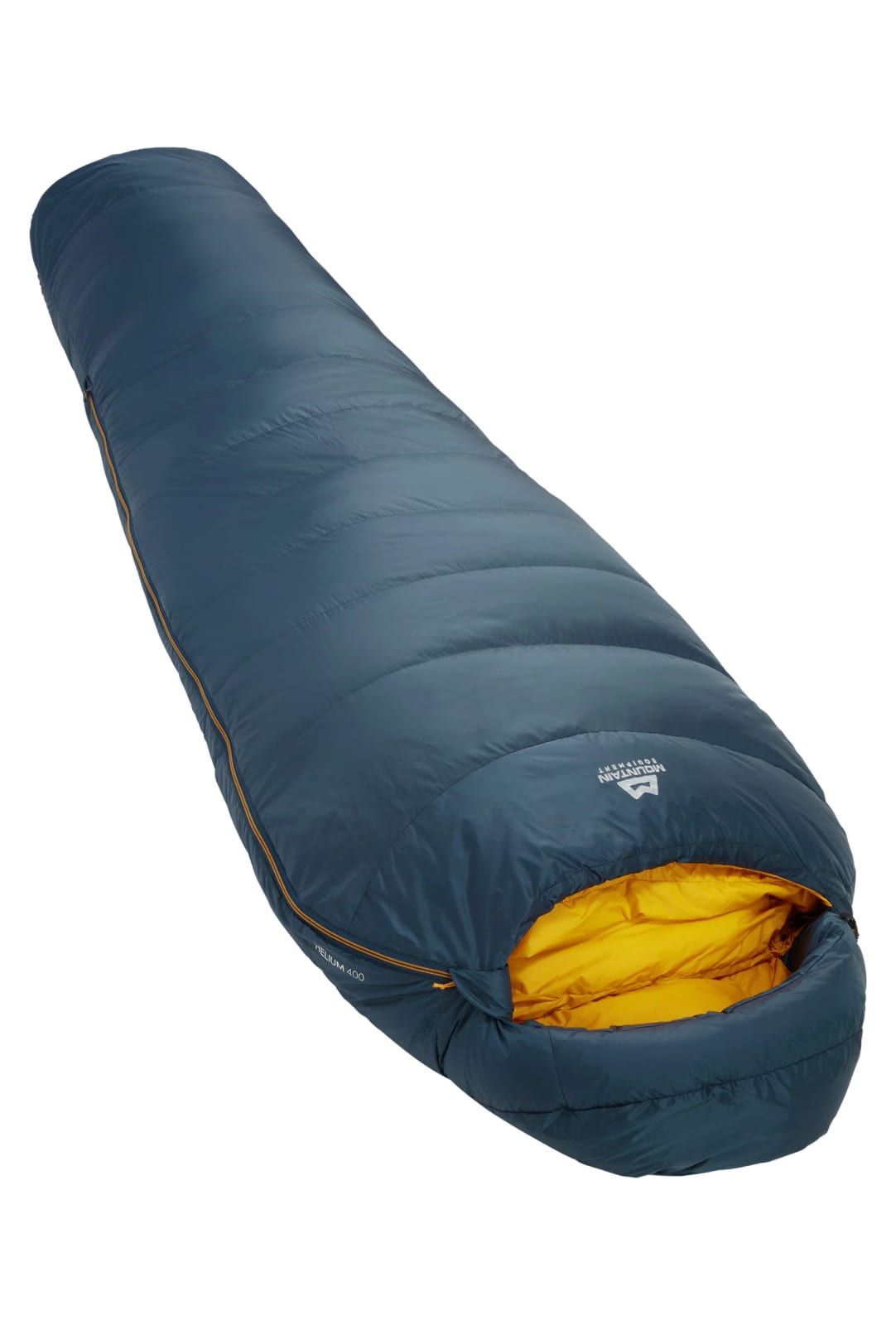
Mountain Equipment Helium 400
- Warmth
- Comfort 0 °C
- Weight
- 820 g
- Packed size
- 24 × 21 × 20 cm
- Fill
- 700 FP duck down, 403 g fill
The Helium 400 has exactly the rating we'd choose for most of the British camping year: an ISO comfort of 0 °C and a limit of -6 °C, which covers April to October and the odd clear, cold night either side. It does that at 820 g, nearly 600 g lighter than the typical synthetic bag rated 0 to +5 °C. Mountain Equipment is a British brand, the down is RDS certified and traceable, and the shell is recycled. The magnetic Lode Lock closure on the hood and collar works with one hand, even in gloves.
Reasons to buy
- Good balance of warmth, weight and value
- Magnetic Lode Lock hood/collar closure works one-handed and with gloves
- Smooth, well-baffled side zip and box-wall construction with no reported cold spots
Reasons to avoid
- Slim alpine fit may not suit larger builds
- Duck rather than goose down, and no hydrophobic treatment
The bag we'd buy if we could have only one. The fit is slim, so if you're broad or sleep on your side, check you have room. It isn't treated to resist damp, so keep it dry in a bivvy or a tent with good ventilation.
Best budget bag
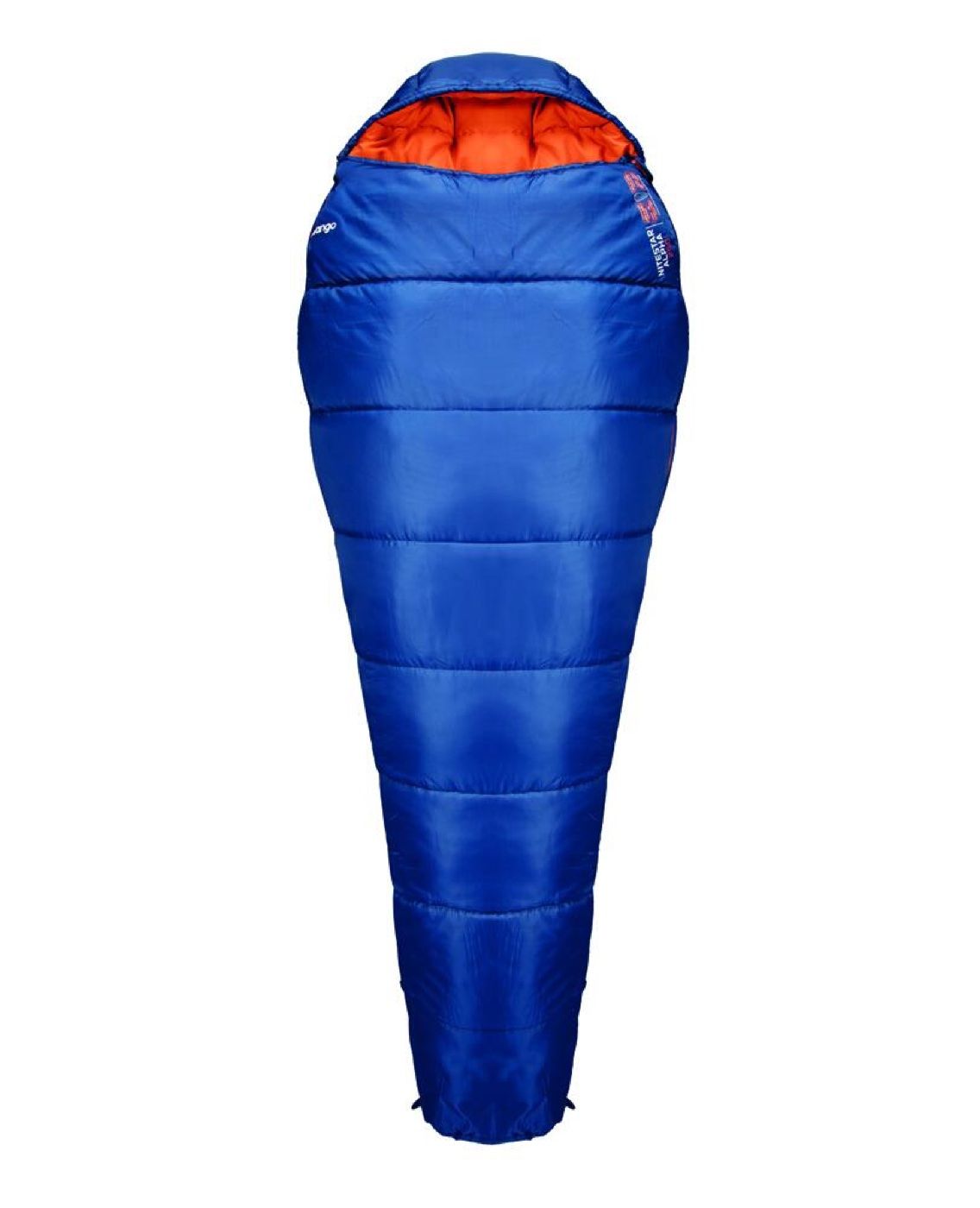
Vango Nitestar Alpha 250
- Warmth
- Comfort +2 °C
- Weight
- 1.6 kg
- Packed size
- Not stated by maker
- Fill
- Vango Insulite Alpha, offset double-layer construction
It's rare to get a lab-tested rating at this price: +2 °C comfort and -4 °C limit for about £40. That's warm enough for campsites from late spring to early autumn, and the draught collar and adjustable hood hold the heat in better than most cheap bags. It's DofE Recommended, widely stocked, and there's a shorter 250S for smaller adults and teenagers.
Reasons to buy
- Lab-tested ISO 23537 comfort 2°C / limit -4°C at a sub-£50 street price
- Retailer customer reviews praise compressibility, price/performance, draft collar and adjustable hood
- DofE Recommended and widely stocked, with a 250S short version for smaller users
Reasons to avoid
- 1.6 kg is heavy for backpacking at this warmth level
- No independent editorial review of the 250 found; only retailer customer feedback
The safest cheap bag for a first camping trip or a Duke of Edinburgh expedition. At 1.6 kg it's heavy to carry for days, so if you'll be walking with it every weekend, save up for something lighter.
Best synthetic for damp weather
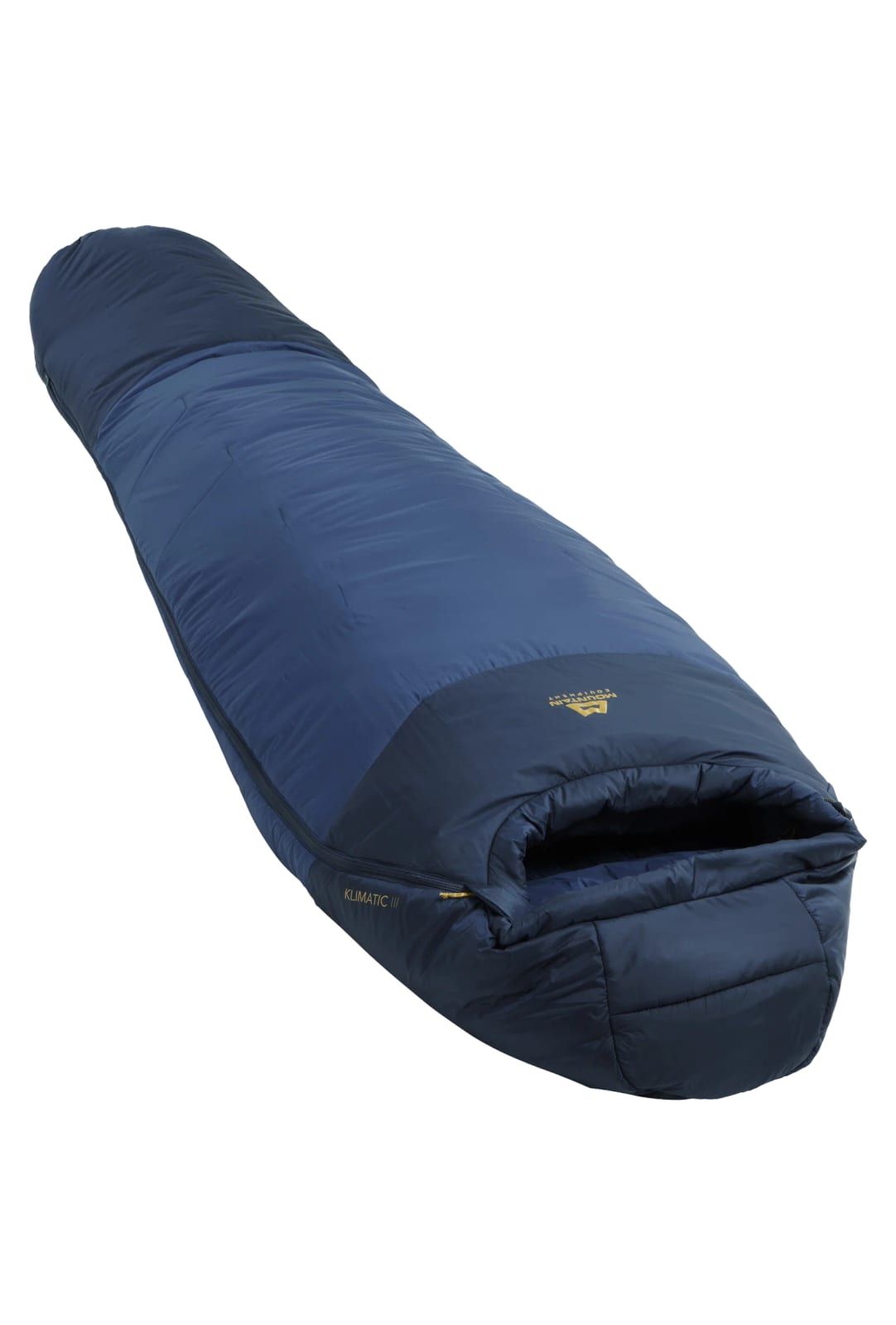
Mountain Equipment Klimatic III
- Warmth
- Comfort +1 °C
- Weight
- 1.22 kg
- Packed size
- 25 × 22 × 21 cm
- Fill
- 90% recycled POLARLOFT synthetic insulation, wave-layer…, 440 g
Down loses much of its warmth when it gets damp, and in a British tent, damp is normal: condensation on the walls, wet kit, a soggy week in the Lakes. Synthetic fill keeps insulating when it's wet, and the Klimatic III is the lightest synthetic bag we compare with a comfort rating of +1 °C or lower: +1 °C at 1.22 kg. Ultralight Outdoor Gear, which stocks it, says that 'temperature-wise, the Klimatic III is impressive'. The insulation and fabrics are recycled, and it has a full-length zip for venting.
Reasons to buy
- 'temperature-wise, the Klimatic III is impressive' - comfort 1°C / limit -5°C suits three-season use in many…
- standout sustainability and stays warm when damp
- easily compressed, adjustable hood, full-length zip, good price/performance
Reasons to avoid
- not ultralight and bulkier than a down equivalent
- Weight and pack size figures conflict between ME's own page sections and retailers
The one to choose if you camp in wet weather and don't want to baby a down bag. It's bulkier than down, so check it fits your rucksack before your trip.
Best value down
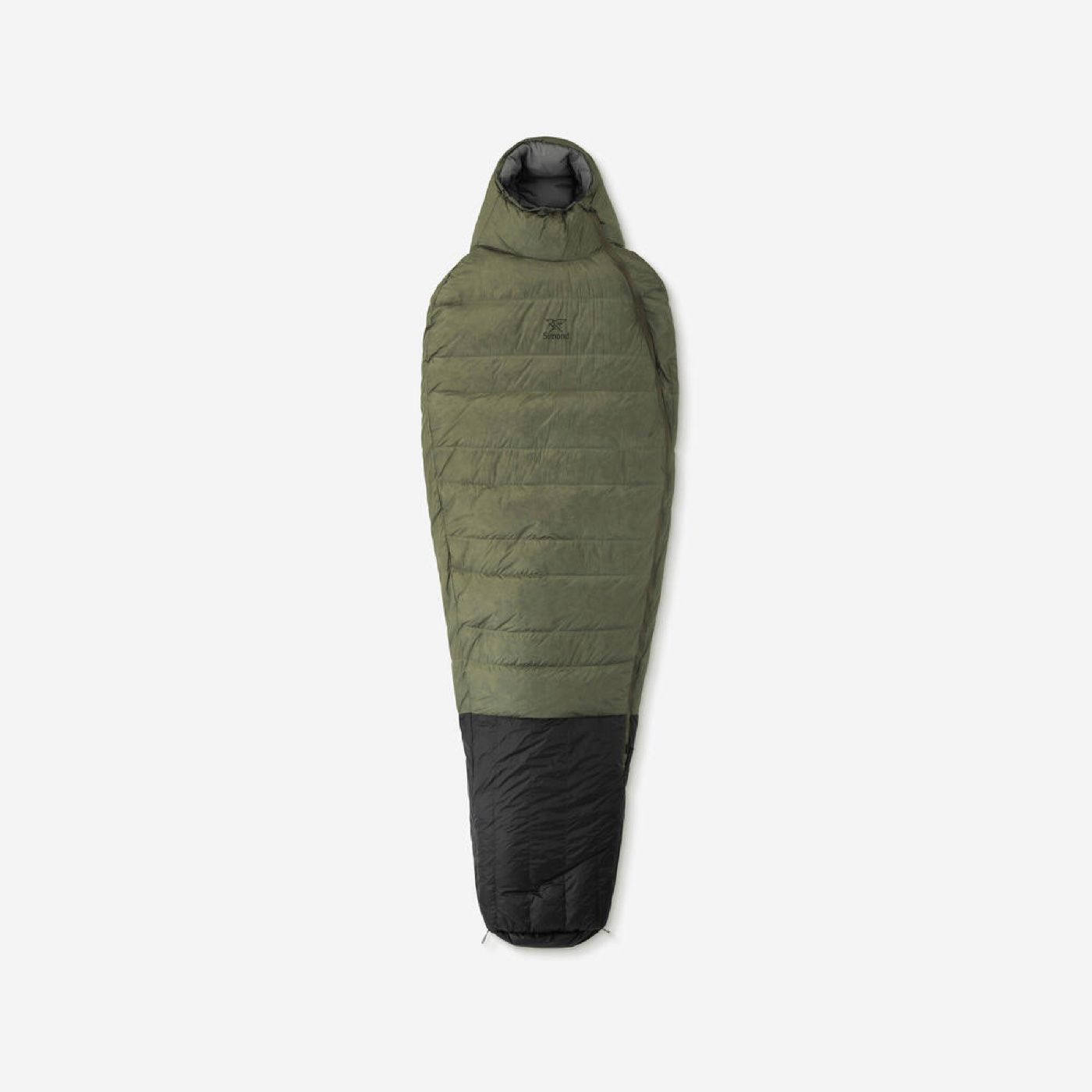
Decathlon Simond MT900 0 °C Down
- Warmth
- Comfort 0 °C
- Weight
- 930 g
- Packed size
- 11 L uncompressed
- Fill
- 800 FP down, 495 g fill
Decathlon's MT900 brings the same 0 °C comfort rating as our top pick for about £170, with 800 fill-power down on the top of the bag, where it does most good. It weighs 930 g, about 110 g more than the Helium 400, and it's cut generously for a mummy at about 72 cm across the shoulders. Decathlon publishes the fill weight and the lab rating, which not every cheap down bag does.
Reasons to buy
- Published fill weight, fill power and independent lab rating at this price
- Generous ~72 cm shoulder width for a mummy, full-length draught baffle
Reasons to avoid
- Heavier than premium down bags of similar rating
- Needs an R4.8 mat to reach its rating; no neck baffle reported
The easiest way into a light down bag without paying £250. It's sold only by Decathlon, and the price can't be checked automatically, so look at the price on Decathlon's page before you buy.
Best for winter and Scotland
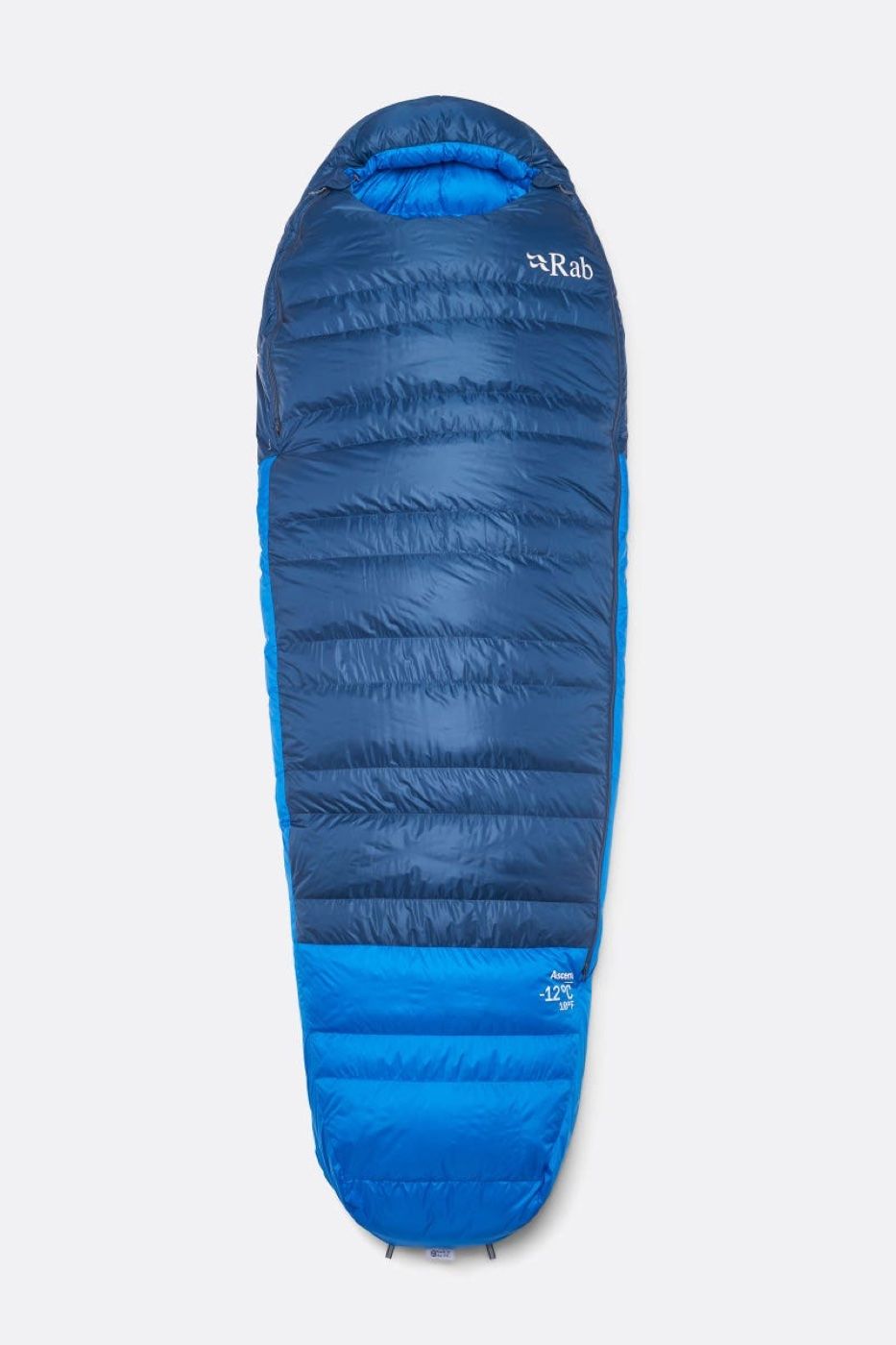
Rab Ascent -12 °C
- Warmth
- Comfort -5 °C
- Weight
- 1.35 kg
- Packed size
- 22 × 40 cm
- Fill
- 650 FP duck down, 680 g fill
From November to March, or high in the Scottish hills at any time of year, you need a comfort rating of -5 °C or lower, and that's what the Ascent -12 °C has, ISO tested. The down has a water-resistant finish, the shell is Pertex Quantum, and the bag is filled in the UK. Its wide mummy cut leaves room for a warm layer inside, which you'll want on a winter night.
Reasons to buy
- Independently tested ISO 23537 comfort rating of -5°C, from a UK-filled bag
- Hydrophobic down and Pertex Quantum shell suit damp UK winters
- The roomy wide-mummy cut and side-sleeper details give space for layers
Reasons to avoid
- Heavy at 1350 g for -5°C comfort: Alpkit's PipeDream 600 is 990 g for EN comfort -10.5°C
- Main zip is only 3/4 length
A dependable winter bag at a fair price. At 1.35 kg it's heavier than premium winter bags, and the zip is only three-quarters length. For a lighter bag rated even lower, see our winter sleeping bags comparison.
Best ultralight
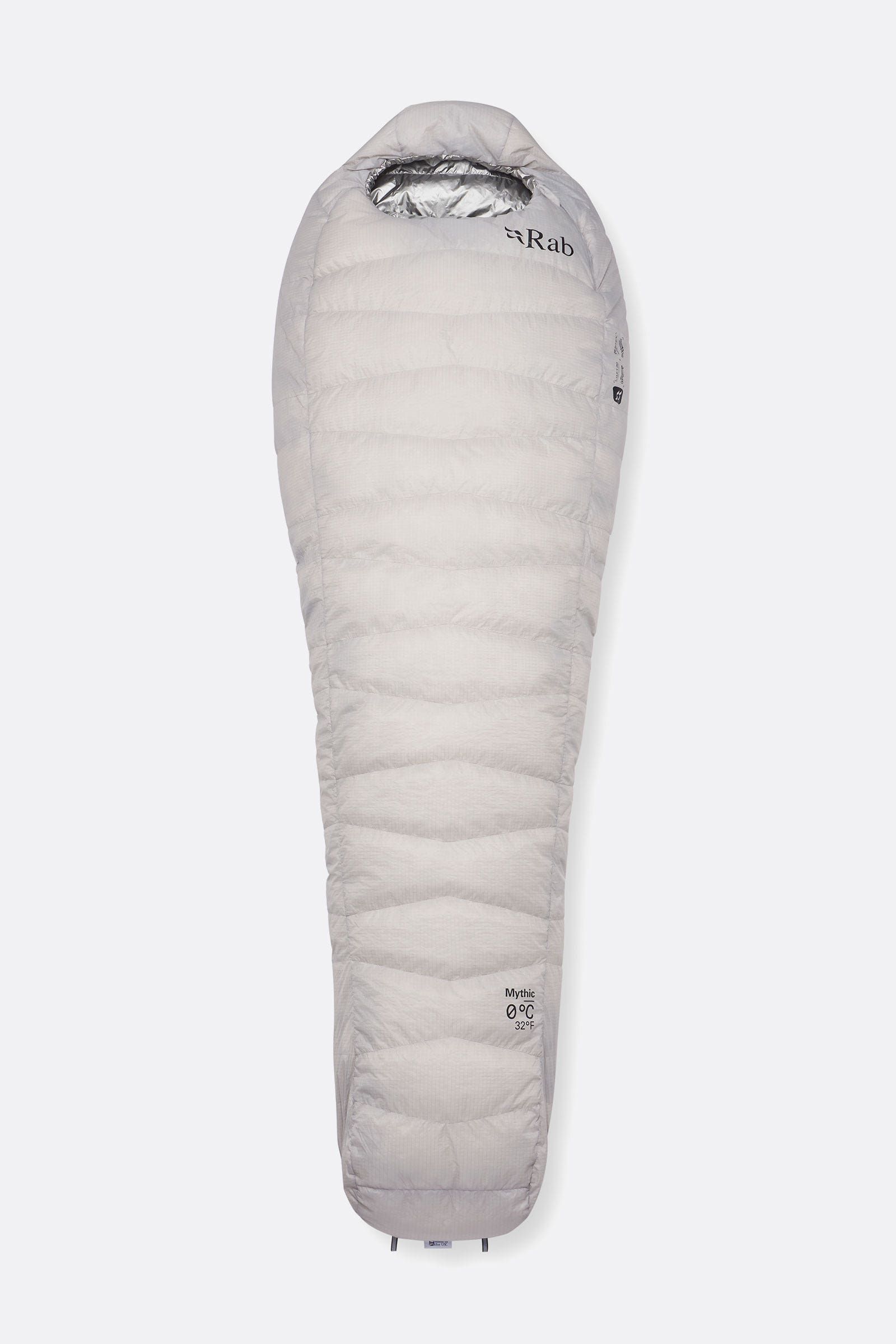
Rab Mythic 0 °C
- Warmth
- Comfort +5 °C
- Weight
- 500 g
- Packed size
- 16 × 30 cm
- Fill
- 900 FP goose down, 187 g fill
500 g for an ISO comfort rating of +5 °C, packing down to 16 × 30 cm. Rab gets there with 900 fill-power goose down treated to resist damp, a heat-reflective lining and a very short zip. Ultralight Outdoor Gear says it 'sits at the very light end of the market'.
Reasons to buy
- ISO 23537 tested at 5 °C comfort / 0 °C limit for just 500 g
- UOG's verdict: at 519 g it 'sits at the very light end of the market'
- Sidewall baffles add loft and help side sleepers, per Rab and UOG
Reasons to avoid
- UOG notes the short zip 'limits heat dumping from the legs' on warmer nights
- £400–£500 is premium money; no independent field test of the 2026 bag found yet
For backpackers, bikepackers and long-distance walkers who count every gram, from late spring to early autumn. It costs about £400, and the short zip makes it hard to cool down on a warm night.
Best for car camping
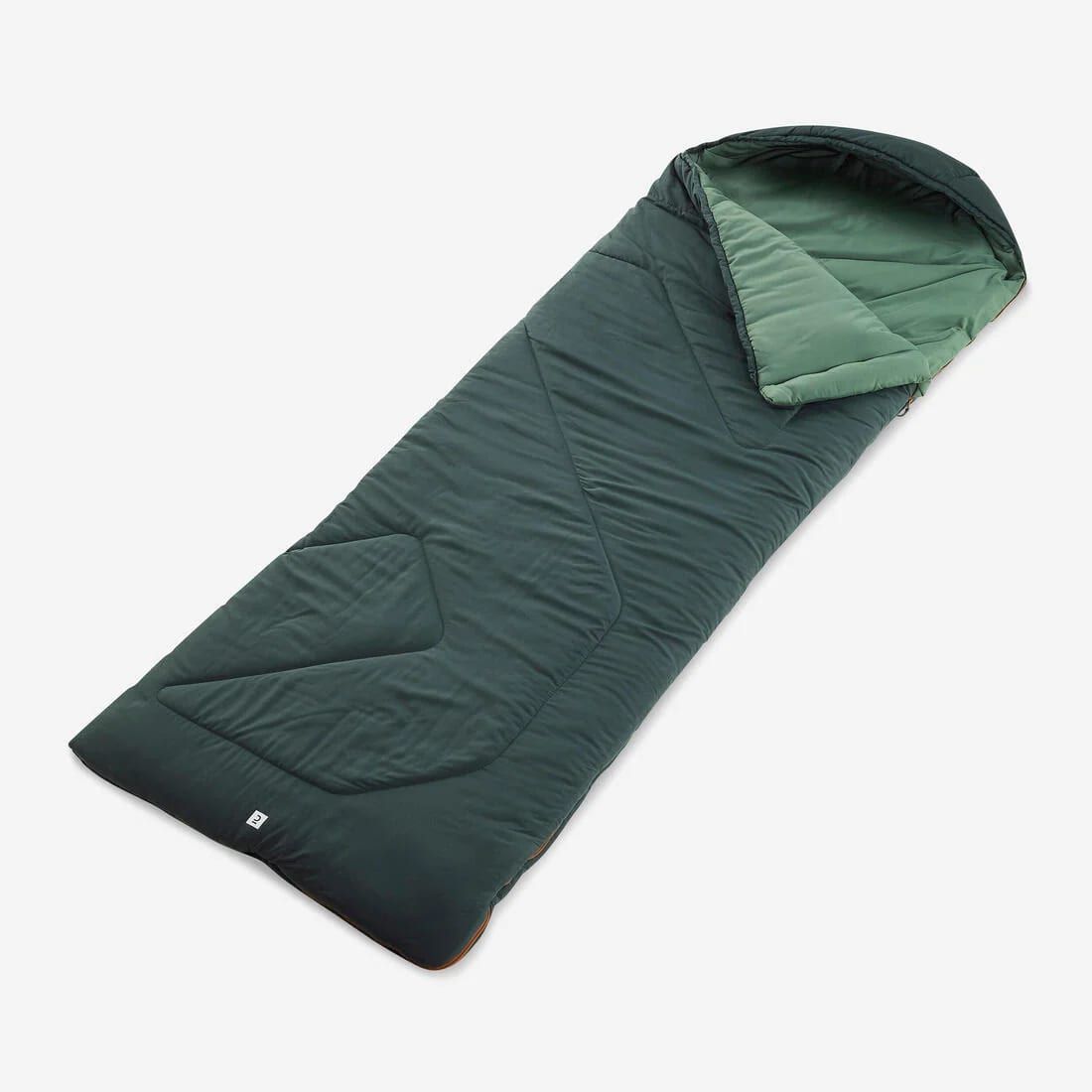
Decathlon Quechua Arpenaz 0 °C
- Warmth
- Comfort 0 °C
- Weight
- 2.2 kg
- Packed size
- 29 L
- Fill
- 100% polyester wadding 350 g/m²
If you never carry your bag further than from the car to the tent, weight doesn't matter, and room does. The Arpenaz is a 215 × 80 cm rectangle with a hood and an ISO comfort rating of 0 °C. That's warm enough for a cold May bank holiday, and the full-length zip opens it out into a duvet on warmer nights.
Reasons to buy
- Roomy rectangular shape with hood; can twin or open as a duvet
- Warm lab rating for the price
Reasons to avoid
- Heavy and bulky - car camping only
- -9°C limit is unusually far below comfort; Decathlon US lists -5°C limit for its Arpenaz 32°F
A warm, roomy family-camping bag for about £60. At 2.2 kg and 29 litres it's far too big to carry, and it's sold only by Decathlon.
| Bag | Best for | Warmth | Weight | Best price |
|---|---|---|---|---|
| Mountain Equipment Helium 400 | Best overall | Comfort 0 °C | 820 g | £240 at Trekitt |
| Vango Nitestar Alpha 250 | Budget | Comfort +2 °C | 1.6 kg | £39.99 at Norwich Camping & Leisure |
| Mountain Equipment Klimatic III | Damp weather | Comfort +1 °C | 1.22 kg | £129.99 at Ultralight Outdoor Gear |
| Decathlon Simond MT900 0 °C Down | Value down | Comfort 0 °C | 930 g | £169.99 at Decathlon |
| Rab Ascent -12 °C | Winter | Comfort -5 °C | 1.35 kg | £305.95 at Snow+Rock |
| Rab Mythic 0 °C | Ultralight | Comfort +5 °C | 500 g | £399.95 at Cotswold Outdoor |
| Decathlon Quechua Arpenaz 0 °C | Car camping | Comfort 0 °C | 2.2 kg | £59.99 at Decathlon |
Down or synthetic: what our data shows
We took every lab-rated bag we compare with a comfort rating between 0 °C and +5 °C, the range most UK campers need, and split them by fill. The difference is clear: down saves you about 575 g, and costs about £195 more.
| Down | Synthetic | |
|---|---|---|
| Bags compared | 8 | 13 |
| Typical (median) weight | 825 g | 1,400 g |
| Typical (median) price | £255 | £60 |
| Lightest | Rab Mythic 0 °C, 500 g | Rab Radeon 0 °C, 960 g |
| Cheapest | Decathlon MT900 5 °C, £150 | Mountain Warehouse Summit 250, £30 |
- Choose down if you carry your bag: backpacking, wild camping, cycle touring. It's lighter, packs smaller and lasts many years if you look after it. Keep it dry, and air it out each morning.
- Choose synthetic for campsites, festivals, DofE, children and anywhere it's likely to get wet. It's cheaper, it keeps insulating when damp and you can wash it easily.
- Water-resistant down, such as Rab's, narrows the gap in damp weather, but it isn't waterproof. Compare every down bag in our down sleeping bags comparison and every synthetic bag in our synthetic comparison.
What else to check before you buy
Five things that matter as much as the rating
- LengthYour feet shouldn't press against the end, or they'll compress the filling and get cold. Most bags fit people up to about 185 cm; above that, buy the long version.
- ShapeA mummy shape is warmest for its weight. A rectangular bag is roomier and opens out as a duvet, but has more space to heat. Side sleepers should look for a wider or relaxed cut.
- ZipA full-length, two-way zip lets you vent your feet on warm nights. Short zips save weight but make it harder to cool down. Left- and right-zip versions can often be zipped together.
- Hood and draught collarA shaped hood with a drawcord and a collar around your shoulders stop warm air escaping every time you move. They matter more than an extra degree on the rating.
- Packed sizeA big synthetic bag can fill half a 45-litre rucksack. If you'll carry it, check the packed size against your pack, and use a compression sack.
Others we considered
- Rab Neutrino -6 °C: the same 0 °C comfort rating as our top pick, slightly heavier at 870 g, and around £400. Lovely, but we couldn't justify the extra cost.
- Alpkit PipeDream 400: a strong rating (EN comfort -4.2 °C) at 770 g, but it's only sold by Alpkit, so there's no way to shop around.
- Vango Mantis 300: +3 °C comfort at 1.34 kg, lighter than the Nitestar Alpha 250, but stock was patchy when we checked.
- Mountain Warehouse Summit 250: the cheapest lab-rated adult bag we compare at about £30, with a +5 °C comfort rating. Fine for summer campsites.
- Snugpak bags such as the Softie 6 Kestrel: well made in the UK and well liked, but rated by Snugpak itself rather than to ISO 23537, so we can't compare them fairly.
Frequently asked questions
What temperature sleeping bag do I need for UK camping?+
For most UK camping from April to October, choose an ISO comfort rating between 0 °C and +5 °C. The Met Office's average overnight low is 11 °C in July and August, but only 6 °C in May and October, and clear nights are colder than average. For winter camping, or Scotland's hills outside summer, choose a comfort rating of -5 °C or lower.
Is a 3-season sleeping bag warm enough for the UK?+
Usually, yes, from spring to autumn. But 3-season isn't a standard, and brands use it for bags rated anywhere from about +5 °C to -5 °C. Ignore the season label and read the ISO comfort rating instead: 0 °C to +5 °C covers most of the UK camping year.
Is a 2-season sleeping bag enough for a UK summer?+
For lowland campsites in July and August, a bag with a comfort rating of around +5 to +10 °C is normally fine. It will feel cold on a clear night in June or September, and in the hills, so if you only want one bag, a 0 to +5 °C rating is the safer choice.
Is down or synthetic better for UK weather?+
Down is lighter and packs smaller for the same warmth, but it loses insulation when it gets damp. Synthetic is cheaper and keeps you warm when it's wet. In our comparison, down bags rated 0 to +5 °C typically weigh about 575 g less than synthetic bags with the same rating, and cost about £195 more. Choose down if you carry your bag, and synthetic for campsites and wet trips.
What's the difference between comfort and limit ratings?+
Under ISO 23537, the comfort rating is the lowest temperature at which a typical adult who feels the cold sleeps comfortably, lying relaxed. The limit rating is the lowest at which a typical adult who sleeps warm can sleep for eight hours curled up. Choose your bag by the comfort rating.
Do sleeping bags have a tog rating?+
Adult sleeping bags are rated in degrees Celsius using ISO 23537, not in tog like duvets. Tog is used for baby sleeping bags and some emergency bags. If a bag only has a tog figure or a season count, you can't compare its warmth fairly with ISO-rated bags.
Do I need a warmer sleeping bag for Scotland?+
Usually a little. Northern Scotland's average overnight low is 1 to 1.6 °C colder than the UK average in every month, and high or exposed camps are colder again. For the Highlands in spring or autumn, choose a comfort rating of 0 °C or lower.
How much should I spend on a sleeping bag?+
About £40 gets you a lab-rated synthetic bag that's warm enough for summer and early autumn, such as the Vango Nitestar Alpha 250. Around £170 to £250 buys a light 0 °C down bag that will last for years. Above that, you're paying for less weight, not more warmth.
Sources
- 1UK and regional series: mean daily minimum temperature (Met Office)
- 2Northern Scotland series: mean daily minimum temperature (Met Office)
- 3Mountain Equipment Helium 400 product page
- 4Vango Nitestar Alpha 250 product page
- 5Ultralight Outdoor Gear: Klimatic III listing and verdict
- 6Decathlon MT900 0 °C down sleeping bag
- 7Rab Ascent -12 °C product page
- 8Ultralight Outdoor Gear: Rab Mythic 0 °C listing and verdict
- 9Decathlon Arpenaz 0 °C camping sleeping bag
We may earn a commission when you buy through links on this page, at no extra cost to you. It never changes what we recommend. How we test