Best winter sleeping bags UK 2026: how warm a bag you really need
3 November 2026 · 12 min read · Prices checked 31 October 2026
Best winter sleeping bags UK
Most winter bags are built for the Alps, not a frosty night in the Peak District. We looked at what British winter nights actually do, then picked six bags from the 13 we compare that are warm enough without paying for warmth you'll never use.
Here's the thing nobody selling sleeping bags tells you: a British winter is cold, but it isn't the Arctic. Plenty of people buy a bag rated to -20 °C for a night on Dartmoor, then lie awake sweating at 2 °C. Others take a summer bag on a November trip and spend the night shivering in every layer they own. The right winter bag sits between the two, and it's usually cheaper than you'd think.
Our winter picks at a glance
How cold does a UK winter night get?
The Met Office's records for 1991–2020 put the average overnight low across the UK at 1.1 to 1.4 °C from December to February. In northern Scotland it's 0.1 to 0.3 °C. Those are averages for whole regions, so they hide the nights that matter: a clear, still night after a cold day, a camp in a valley where frost collects, or a pitch a few hundred metres up a hill, where it's colder again.
| Month | Choose a comfort rating of | UK average low | Northern Scotland |
|---|---|---|---|
| November | -5 °C | 3.6 °C | 2.4 °C |
| December | -5 °C | 1.4 °C | 0.3 °C |
| January | -5 °C, or -10 °C in the hills | 1.2 °C | 0.3 °C |
| February | -5 °C, or -10 °C in the hills | 1.1 °C | 0.1 °C |
| March | -5 °C | 2.2 °C | 1.1 °C |
Our rule of thumb is to choose a comfort rating about 5 °C below the average low. That gives you a margin for a night that's colder than average. In practice it means -5 °C comfort covers most lowland and low-hill winter camping in England, Wales and southern Scotland. Go to -10 °C comfort for the Highlands, high camps, or if you know you sleep cold.
How we chose
We compare 13 winter sleeping bags sold in the UK, from £68 to over £500. For our picks we only used bags with a lab-tested rating, either ISO 23537 or its predecessor EN 13537, because those are measured the same way and can be compared fairly. That ruled out some well-liked bags, like Snugpak's, which use their own ratings (more on those below). Prices are the lowest we found at a UK retailer with the bag in stock on 31 October 2026. We haven't slept in every bag, so where testers have, we quote them and link to them. You can read the full method on our How we test page.
The best winter sleeping bags for the UK
Best overall
Rab Ascent -12 °C
- Warmth
- Comfort -5 °C
- Weight
- 1.35 kg
- Packed size
- 22 × 40 cm
- Fill
- 650 FP duck down, 680 g fill
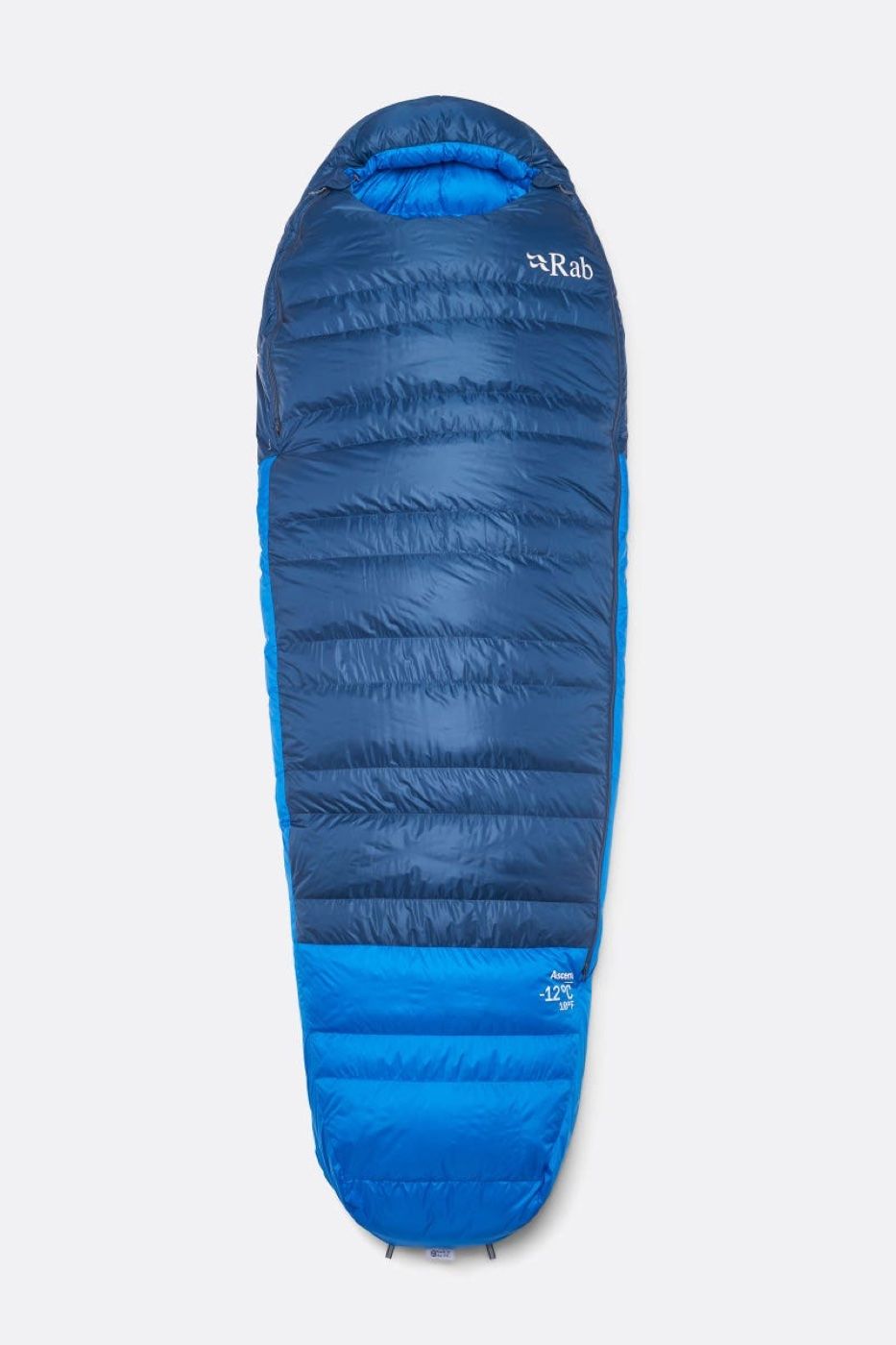
The Ascent -12 °C has exactly the rating we'd pick for a British winter: an ISO comfort of -5 °C and a limit of -12 °C. Its down has a water-resistant finish, and the shell is Pertex Quantum, which helps in the damp, condensation-heavy conditions that are normal in a UK winter tent. The wide mummy cut leaves room to wear a down jacket inside on the coldest nights, and side sleepers won't feel trapped. It's filled in the UK, and you can buy it from three UK shops.
Reasons to buy
- Independently tested ISO 23537 comfort rating of -5°C, from a UK-filled bag
- Hydrophobic down and Pertex Quantum shell suit damp UK winters
- The roomy wide-mummy cut and side-sleeper details give space for layers
Reasons to avoid
- Heavy at 1350 g for -5°C comfort: Alpkit's PipeDream 600 is 990 g for EN comfort -10.5°C
- Main zip is only 3/4 length
The bag we'd buy for winter camping south of the Highlands. At 1.35 kg it's not the lightest, and the main zip is only three-quarters length, but for the money there's nothing better rated.
Best budget winter bag
Decathlon Simond MT500 -5 °C
- Warmth
- Comfort -5 °C
- Weight
- 1.65 kg
- Packed size
- 41 × 23 cm
- Fill
- Silicone-coated spiral polyester fibre wadding
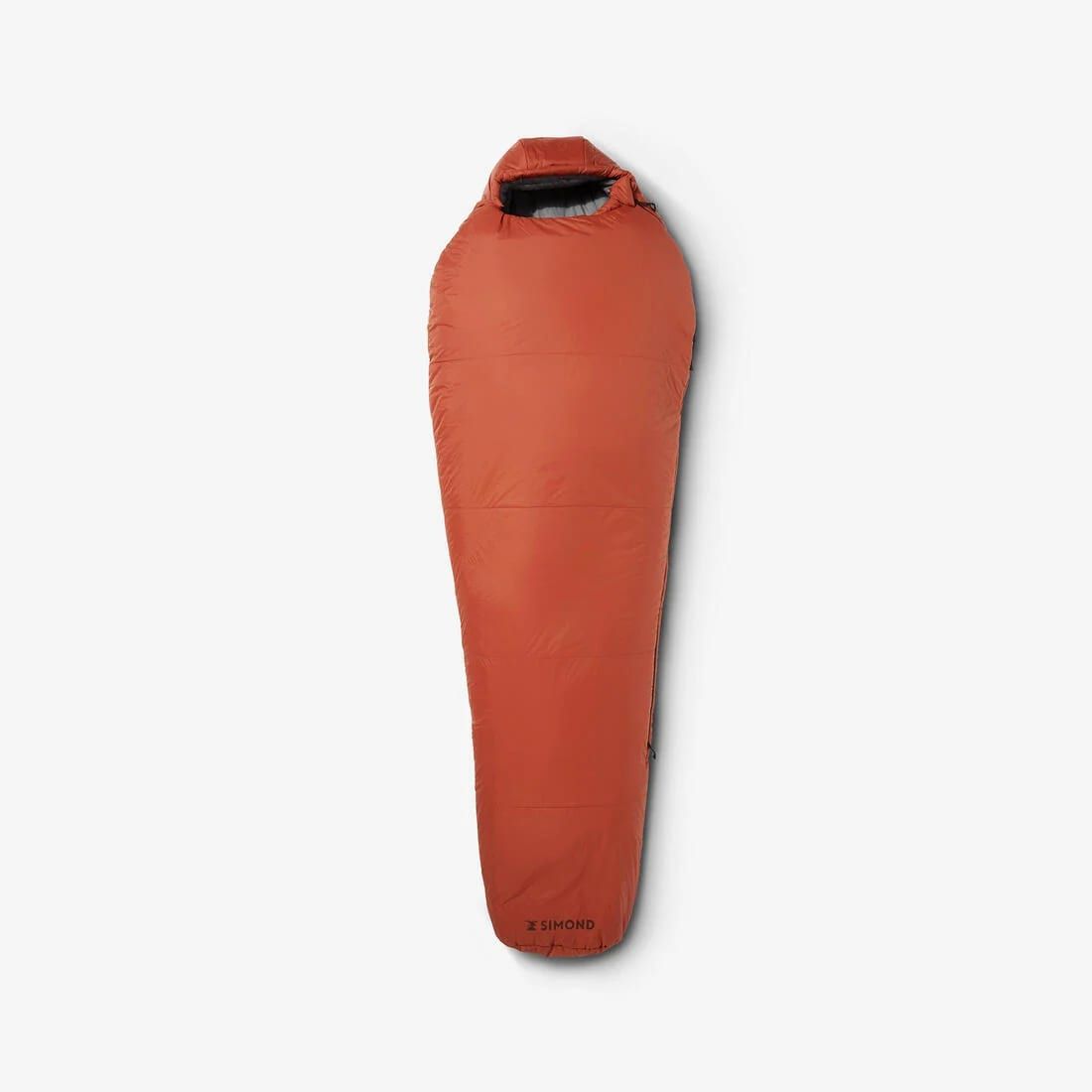
This is the surprise of our data. Decathlon's MT500 has the same -5 °C ISO comfort rating as our top pick for about £80, and it weighs 1.65 kg, only 300 g more than the Rab. The catch is bulk: it packs into about 16 litres, which will fill a good chunk of your rucksack. In return you get synthetic fill that keeps you warm even when it's damp, which matters more in a British winter than in a dry, frozen one.
Reasons to buy
- Warm with no cold spots even when partly wet
- Large shoulder baffle and soft fabric; robust and reliable
- Very low price for a -5°C comfort bag
Reasons to avoid
- Heavy and bulky at 1650 g / 16 L for size L
- Advnture test may be an earlier MT500 -5°C version
If you're new to winter camping, or you camp from the car, start here. It's sold only by Decathlon, so check the price on its page before you buy.
Best value down
Alpkit SkyeHigh 900
- Warmth
- Comfort -6 °C
- Weight
- 1.4 kg
- Packed size
- 24 × 37 cm
- Fill
- 650 FP duck down, 900 g fill
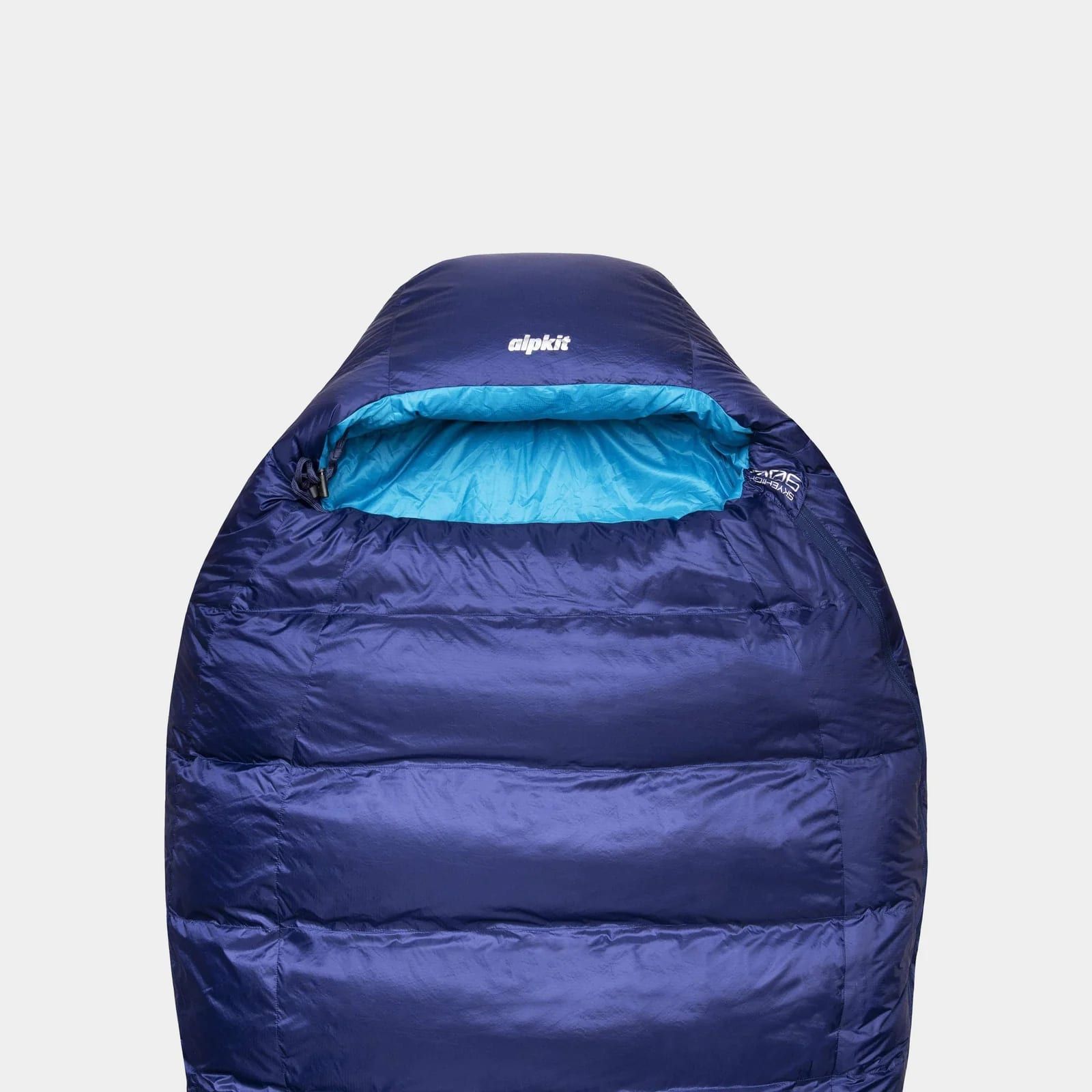
A down bag with an EN comfort rating of -6 °C for £250 is rare. The SkyeHigh is filled with 900 g of recycled down and cut generously, so it suits restless sleepers and anyone who wants to wear layers inside. Live For The Outdoors called it "well-priced and affordable" and found it "packs down very small" in its compression sack.
Reasons to buy
- 'well-priced and affordable' with 'mid-range performance across all metrics'
- 'packs down very small' thanks to a good compression sack
- Roomy cut suits side-sleepers; RDS recycled down and PFC-free DWR
Reasons to avoid
- 'the comfort temperature rating is a little disappointing' for a full winter bag
- hardware 'feels a little basic and cheap'; 650FP down is not hydrophobic
Warm, roomy and good value. The 650 fill-power down isn't treated to resist damp, so look after it in a wet tent. It's only sold direct by Alpkit.
Best warmth for the weight
Alpkit PipeDream 600
- Warmth
- Comfort -10.5 °C
- Weight
- 990 g
- Packed size
- 30 × 21 cm
- Fill
- 750 FP duck down, 600 g fill
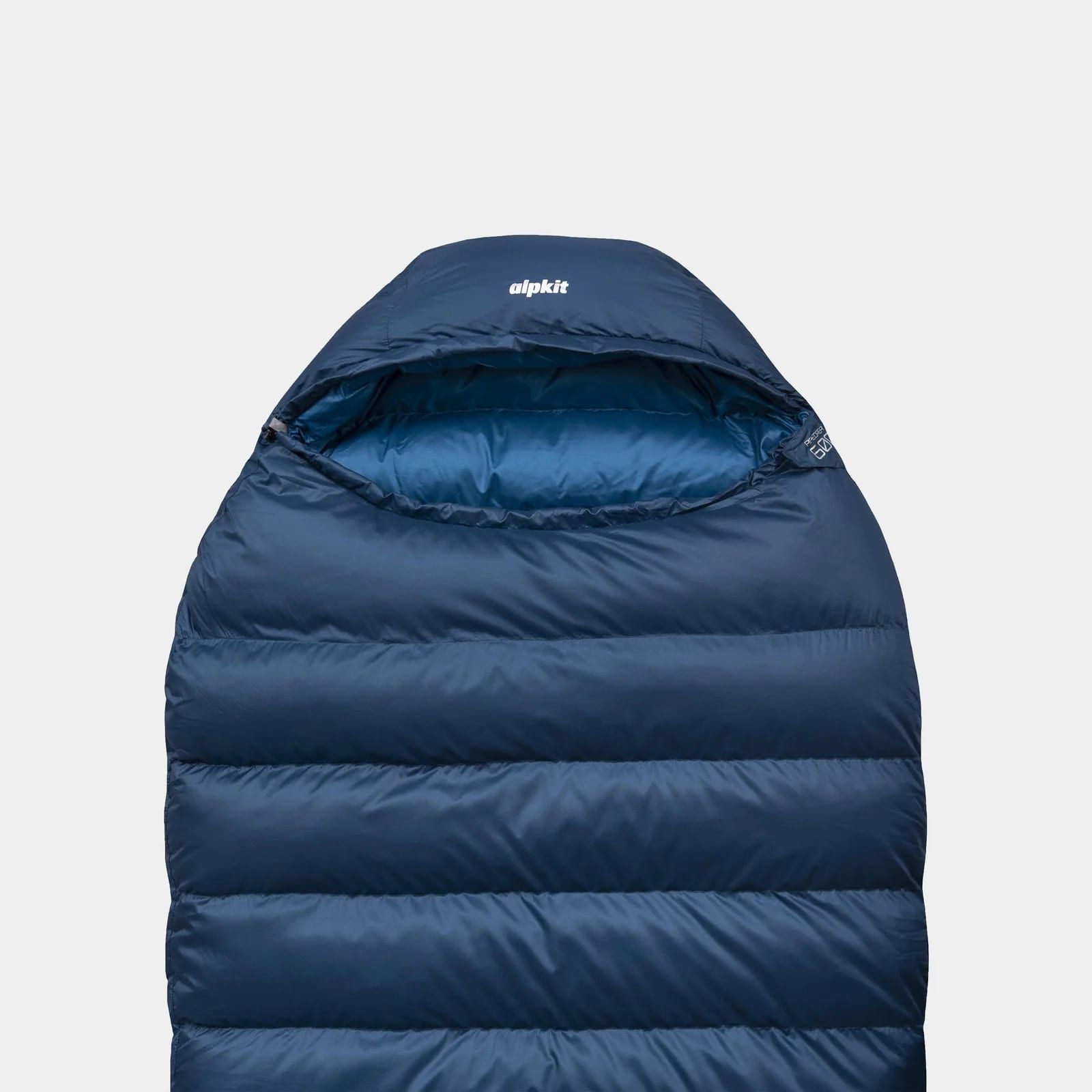
Alpkit's PipeDream 600 has an EN comfort rating of -10.5 °C at 990 g, the warmest rating for its weight of any lab-rated bag we compare. That's 660 g lighter than a Rab Ascent with a similar rating. The down is treated to resist damp, and road.cc's tester called the warmth "excellent", with "no cold spots".
Reasons to buy
- 'Excellent warmth', with 'no cold spots' when tested to about -4°C
- Packs small, and the hydrophobic down helps in damp conditions
- The sculpted neck baffle 'really falls into place to keep drafts out'
Reasons to avoid
- No short version and no custom options
- £349.99 now against £270 when road.cc tested it in 2021
The one for winter backpackers, bothy-baggers and anyone carrying their bag up a hill. It costs £350 and is only sold by Alpkit. There's no short version.
Best for Scottish winter
Rab Ascent -18 °C
- Warmth
- Comfort -10 °C
- Weight
- 1.65 kg
- Packed size
- 26 × 45 cm
- Fill
- 650 FP duck down, 880 g fill
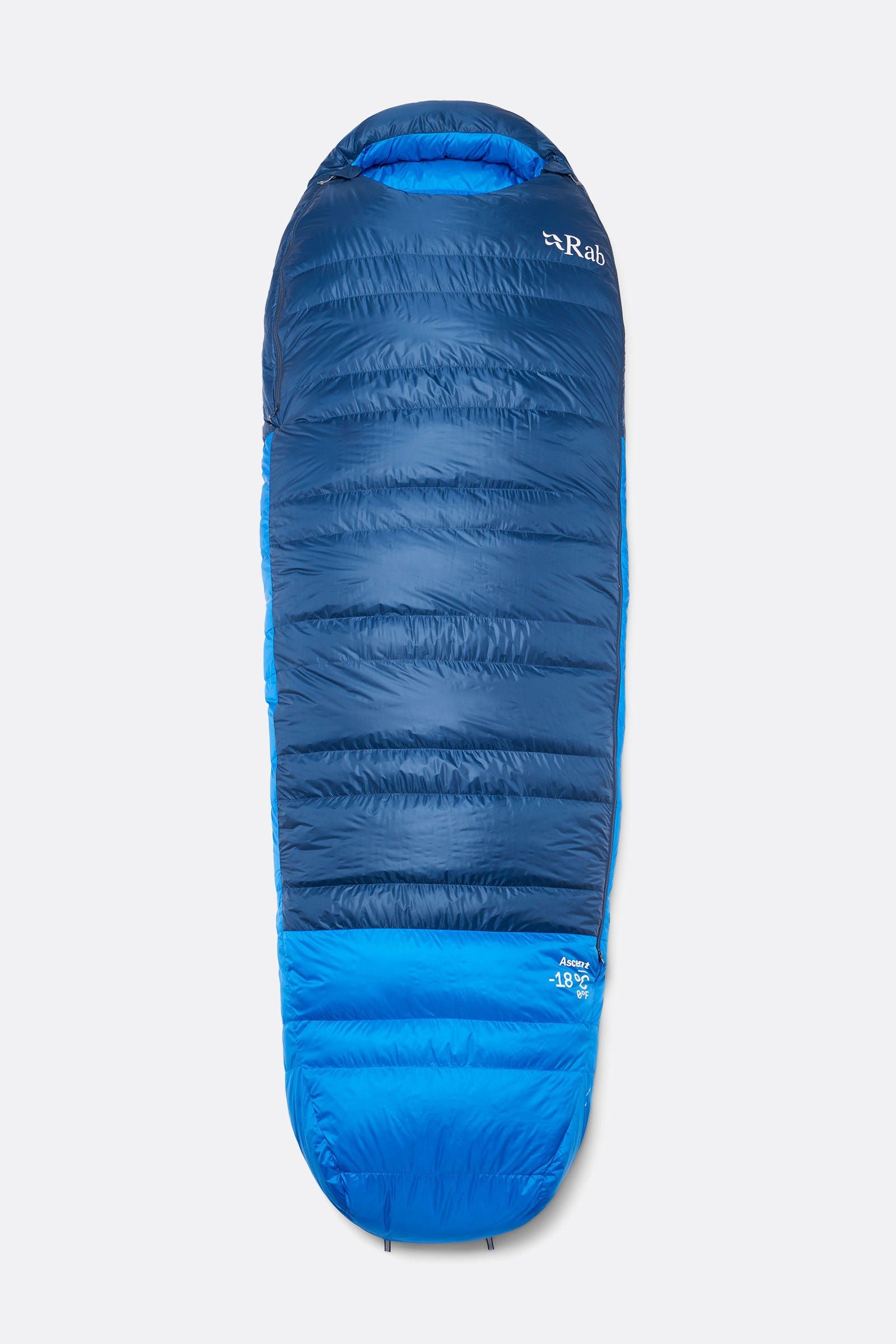
For the Highlands, high camps or a proper cold snap, you want -10 °C comfort, and the Ascent -18 °C gives you that for about £348. It has the same water-resistant down and roomy cut as our top pick, plus a short arm zip, so you can cook or read without unzipping the bag. Compared with the Ascent -12 °C, you get 5 °C more warmth for about 300 g and £42 more.
Reasons to buy
- ISO comfort -10 °C, five degrees warmer than the Ascent -12 °C, for £30 more at Rab
- Wide mummy cut leaves room for a down jacket inside on the coldest nights
- Short second zip lets you use your arms, e.g. to cook, while staying zipped in
Reasons to avoid
- 1650 g and 26 × 45 cm packed: Rab's Neutrino -18 °C gets the same rating in 1280 g (at £670)
- Main zip is only 3/4 length, so it vents less well on milder nights
Too warm for most of England most of the time, but exactly right if you head north or high. At 1.65 kg it's heavy, so it's best for shorter walk-ins.
Best lightweight
Rab Neutrino -12 °C
- Warmth
- Comfort -5 °C
- Weight
- 1.07 kg
- Packed size
- 20 × 35 cm
- Fill
- 800 FP goose down, 600 g fill
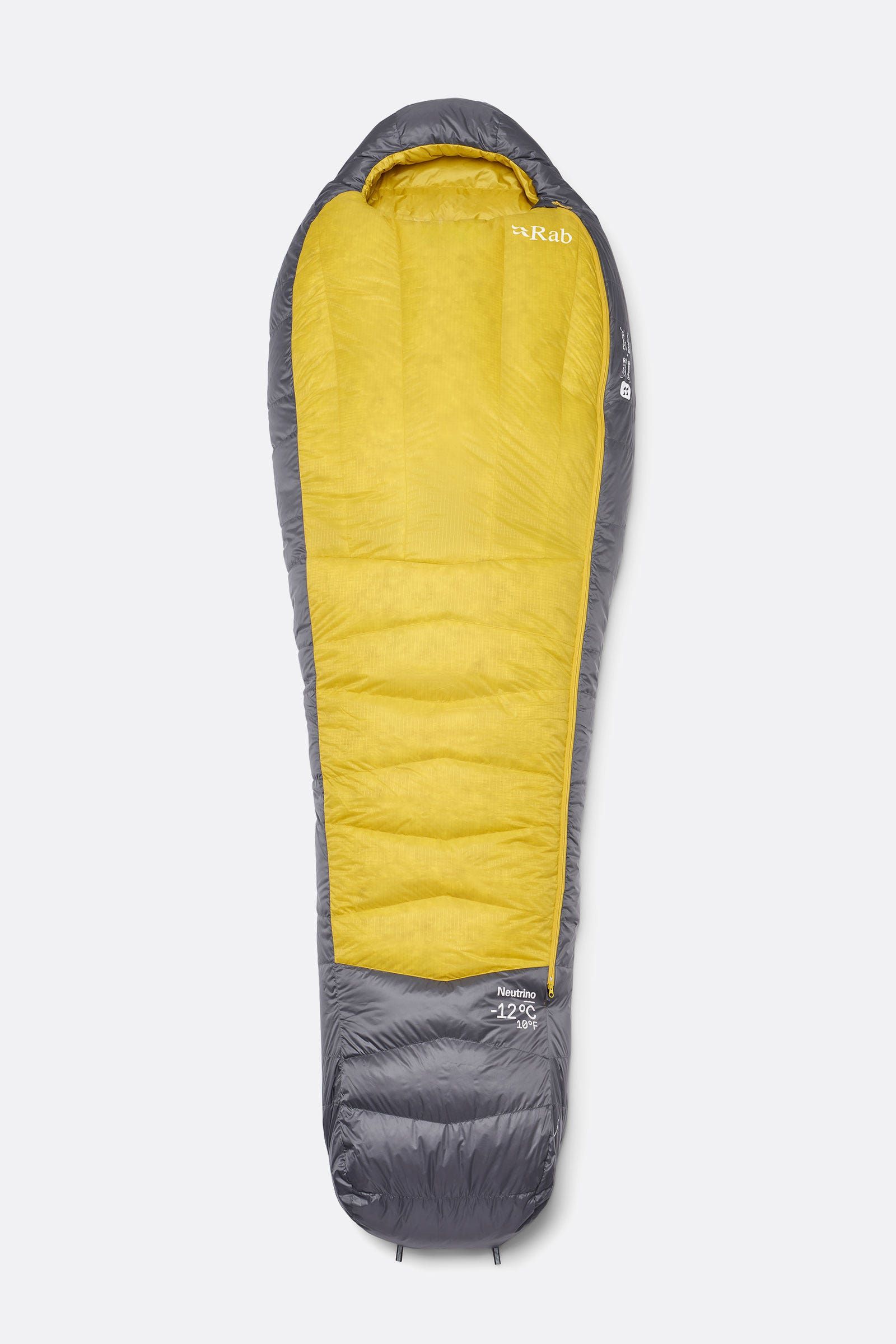
The Neutrino -12 °C has the same ISO rating as the Ascent, -5 °C comfort, at 1,070 g instead of 1,350 g. It gets there with 800 fill-power goose down, water-resistant like the Ascent's, inside a Pertex Quantum shell. Ultralight Outdoor Gear says its "slightly more forgiving cut" suits side sleepers better than most lightweight bags.
Reasons to buy
- ISO comfort -5 °C for 1070 g: about 280 g lighter than Rab's Ascent -12 °C with the same rating
- 800 FP hydrophobic down and a Pertex Quantum shell suit damp, cold UK winter nights
- UOG: 'a slightly more forgiving cut than ultralight options', so it suits side sleepers
Reasons to avoid
- At £570 RRP it costs well over the Ascent -12 °C's £360 for the same ISO rating
- 10D top fabric needs more care around crampons, stoves and rough bothy floors than 20D bags
Worth it if every gram matters: long winter walks, cycle touring or winter wild camping. Saving 280 g costs about £180 more than the Ascent, so be honest with yourself about whether you'll notice.
| Bag | Best for | Warmth | Weight | Best price |
|---|---|---|---|---|
| Rab Ascent -12 °C | Best overall | Comfort -5 °C | 1.35 kg | £305.95 at Snow+Rock |
| Decathlon Simond MT500 -5 °C | Budget | Comfort -5 °C | 1.65 kg | £79.99 at Decathlon |
| Alpkit SkyeHigh 900 | Value down | Comfort -6 °C | 1.4 kg | £249.99 at Alpkit |
| Alpkit PipeDream 600 | Warmth for weight | Comfort -10.5 °C | 990 g | £349.99 at Alpkit |
| Rab Ascent -18 °C | Scottish winter | Comfort -10 °C | 1.65 kg | £347.55 at Hardloop |
| Rab Neutrino -12 °C | Lightweight | Comfort -5 °C | 1.07 kg | £484.99 at Ultralight Outdoor Gear |
What extra warmth and lightness really cost
Three bags we compare share the same ISO comfort rating of -5 °C, which makes them a fair test of what you're paying for:
| Bag | Price | Weight | Fill |
|---|---|---|---|
| Decathlon MT500 -5 °C | £80 | 1,650 g | Synthetic |
| Rab Ascent -12 °C | £306 | 1,350 g | 650 FP duck down |
| Rab Neutrino -12 °C | £485 | 1,070 g | 800 FP goose down |
- Going from synthetic to down saves 300 g and costs about £226 more. That's worth it if you carry your bag, and not if you don't.
- Going from good down to premium down saves another 280 g for about £180 more. Unless you're counting grams, that's the money to keep.
- Packed size is the other difference. The MT500 packs into about 16 litres. The down bags are far smaller, which matters more than the weight if you're squeezing a winter bag into a 50-litre rucksack.
Down or synthetic for winter?
Down packs smaller and weighs less for the same warmth, and treated down copes better with damp than it used to. Synthetic is heavier and bulkier but keeps insulating when it's wet, is easy to wash and costs a fraction of the price. A British winter is often wet rather than frozen, with condensation dripping off the tent walls by morning, so synthetic makes more sense here than it would in the Alps. If you carry your bag, choose treated down; if you don't, synthetic is the sensible buy. You can compare all of them in our winter sleeping bags comparison.
What about Snugpak and other brand-rated bags?
You'll see bags like the Snugpak Sleeper Expedition rated to -12 °C comfort for under £70, which sounds too good to be true. It may be a fine bag. Snugpak makes them in Britain and owners like them, but the rating is Snugpak's own, not from an ISO lab test, so it can't be compared directly with the bags above. It also weighs 2.6 kg. For a car-camping bag or a spare for the house, brand-rated bags can be good value; for a night on a hill, we'd rather trust an ISO figure.
Get the rest of your sleep system right
A winter bag on its own won't keep you warm. In winter you lose more heat into the ground than into the air, and every ISO rating assumes you're lying on an insulated mat.
Winter warmth checklist
- Use a winter matLook for a high R-value. Most winter campers use R4 or above, or put a closed-cell foam mat under an inflatable one. On frozen ground this matters as much as the bag.
- Eat before bedYour body makes the heat; the bag only keeps it. A hot meal or a snack with some fat in it before you sleep helps.
- Go to bed warmGet warm before you get in, with a short walk or a hot drink. A bag can't warm you up if you start cold.
- Wear dry layers, not damp onesChange into dry base layers and a hat. Damp clothes from the day will chill you all night.
- Fill the footboxCold feet are the most common winter complaint. Wear dry, thick socks, put tomorrow's spare layers in the footbox, and add a hot water bottle in a sock.
- Don't breathe into the bagYour breath adds moisture, which makes the filling less warm. Cinch the hood around your face instead.
Frequently asked questions
What temperature sleeping bag do I need for winter camping in the UK?+
For most winter camping in England, Wales and southern Scotland, choose an ISO comfort rating of about -5 °C. The Met Office's average overnight low from December to February is about 1 °C across the UK, and clear or high nights are colder. For the Scottish Highlands or high camps, choose a comfort rating of -10 °C.
Is a 4-season sleeping bag worth it?+
Only if you camp in winter. "4-season" isn't a standard, so brands use it for bags with comfort ratings anywhere from about 0 °C to -15 °C. Ignore the label and read the ISO comfort rating. A bag rated about -5 °C comfort is right for most UK winter camping.
What's the warmest sleeping bag in the UK?+
Expedition bags such as Mountain Equipment's Snowline are rated to -23 °C, but that's far warmer than a UK winter needs. Of the lab-rated bags we compare, Alpkit's PipeDream 600 (-10.5 °C comfort), Sea to Summit's Spark -18 °C and Rab's Ascent -18 °C (both -10 °C comfort) are the warmest, and that's plenty for a Scottish winter.
How do I stop cold feet in a sleeping bag?+
Wear thick, dry socks you haven't walked in, put spare layers in the footbox, and add a hot water bottle wrapped in a sock. A warm mat matters too, because cold feet often come from the ground. Make sure the bag isn't too long for you, as empty space at the feet is hard to keep warm.
Down or synthetic for winter camping?+
Down is lighter and packs smaller, and treated down handles damp better than it used to. Synthetic is cheaper, heavier and keeps you warm when wet. In our comparison, a -5 °C synthetic bag weighs about 300 g more than a similar down bag and costs about £226 less.
Can I use a summer sleeping bag in winter with a liner?+
Not safely for a cold night outdoors. A liner adds a few degrees at best, and makers admit there's no standard test for how much. Layering a summer bag inside a second bag, with a good winter mat, works better, but a proper winter bag is warmer, lighter and less fuss.
How much should I spend on a winter sleeping bag?+
About £80 gets you an ISO-rated -5 °C synthetic bag such as Decathlon's MT500. Around £250 to £350 buys a good down winter bag that will last for years. Above that, you're mostly paying for less weight, not more warmth.
Sources
- 1UK and regional series: mean daily minimum temperature (Met Office)
- 2Northern Scotland series: mean daily minimum temperature (Met Office)
- 3Rab Ascent -12 °C product page
- 4Decathlon MT500 -5 °C sleeping bag
- 5Alpkit SkyeHigh 900 product page
- 6Live For The Outdoors review: Alpkit SkyeHigh 900
- 7Alpkit PipeDream 600 product page
- 8road.cc review: Alpkit PipeDream 600
- 9Rab Ascent -18 °C product page
- 10Ultralight Outdoor Gear: Rab Neutrino -12 °C listing and verdict
- 11Sea to Summit: adding warmth with a liner
- 12Sea to Summit: why Reactor liners have no temperature rating
- 13Therm-a-Rest Synergy liner listing (adds up to 3 °C, Alpine Sports)
We may earn a commission when you buy through links on this page, at no extra cost to you. It never changes what we recommend. How we test