Using a sleeping bag indoors: can it cut your heating bill?
30 October 2026 · 13 min read · Prices checked 31 October 2026
Using a sleeping bag indoors
Bills went up again on 1 October and another rise is forecast for January. We did the sums on keeping warm in a sleeping bag at home, picked the bags that work best indoors, and set out who should keep the heating on.
The energy price cap rose by 4% on 1 October 2026, and the next cap, for January to March, will be announced on 25 November. If you'd rather not put the heating on, a sleeping bag is one of the cheapest ways to stay warm on the sofa or in bed: it costs nothing to run. Here's what it can save, which bags work best at home, and when you shouldn't rely on one.
Our picks for using indoors
Is it cheaper to use a sleeping bag than the heating?
The savings come from heating less space. Central heating and plug-in heaters warm the air in a whole room or home, and that heat leaks out through walls, windows and draughts. A sleeping bag traps the heat your own body makes, right next to you, so there's nothing to pay for.
This is the "heat the human, not the home" approach that MoneySavingExpert popularised during the energy crisis. Martin Lewis's own tip was to sit in a sleeping bag with a hot water bottle inside it, so the bag holds the heat in for longer.
Here's what common ways of keeping warm cost to run at the price cap for 1 October to 31 December 2026: 26.32p per kWh for electricity and 7.97p per kWh for gas, the average Direct Debit rates across England, Scotland and Wales.
| Way to keep warm | Cost to run | Typical power | Warms |
|---|---|---|---|
| Sleeping bag | Nothing | None | You |
| Microwave wheat bag | About 1p a heat | About 2 minutes in the microwave | You |
| Hot water bottle | About 4p a fill | Boiling about 1.2 litres in a kettle | You |
| Electric blanket (single) | About 2–3p an hour | 60–100 W | Your bed |
| Heated throw | About 3–4p an hour | 100–160 W | You |
| Oil-filled radiator | Up to about 39p an hour | 1.5 kW (less once the room is warm) | One room |
| Fan or convector heater | About 53p an hour | 2 kW | One room |
| Gas central heating | About 80p per 10 kWh of gas | Depends on your boiler and home | The whole home |
To work out any electric appliance yourself, find its wattage on the label, divide by 1,000 and multiply by 26.32p. That gives you the cost per hour. Ofgem now bases a typical home on 9,500 kWh of gas a year. At today's rate that's about £757 in gas units, before the standing charge, and most of it goes on heating.
An example: one evening on the sofa
Say you'd normally run a 2 kW fan heater for three hours in the evening. That's about £1.58 a night, or roughly £47 over 30 nights. Sitting in a sleeping bag with a hot water bottle instead costs about 4p a night. A bag that costs £30 to £40 pays for itself within a month.
With central heating, the saving comes from turning the thermostat down a degree or two, or heating only the room you're in. Exactly how much you save depends on your home, your boiler and the weather, so we haven't put a single figure on it. The principle is simple: the less warm air you pay for, the less you spend.
Are sleeping bags warmer than duvets?
Usually, yes, for the same thickness of filling. A duvet lies on top of you, and cold air gets in at the sides and the bottom whenever you move. A sleeping bag wraps right around you: the zip, the closed foot and, on many bags, a hood and draught collar seal the warm air in.
There's no reliable way to convert a sleeping bag's temperature rating into a duvet tog, because the two are tested differently. A better guide is how cold your room gets:
| Your room at night | Comfort rating to look for | Why |
|---|---|---|
| 16 °C or warmer | +8 to +10 °C | Anything warmer will make you sweat |
| 12–16 °C | +2 to +5 °C | Warm enough, and you can unzip it to cool off |
| Below 12 °C, or you always feel cold | 0 °C | Plenty of warmth for an unheated room or a power cut |
Sleeping bag ratings assume you're in a tent on a camping mat, wearing a base layer. Indoors on a mattress you'll feel noticeably warmer, so don't buy a winter bag for the house. You'll overheat and sweat, which leaves you colder later on. Our guide to how we read temperature ratings explains the ISO comfort and limit figures.
What makes a good sleeping bag for indoor use
Weight and packed size don't matter at home. These things do:
- Synthetic filling. It's cheaper than down, copes with sweat and spills, and most bags can go in a home washing machine. Down is lighter and packs smaller, but at home you're paying for qualities you don't need, and it needs a careful wash.
- A rectangular shape. Mummy bags are built to be light, so they're snug around your knees and shoulders. A rectangular bag lets you sit cross-legged on the sofa or sleep on your side.
- A two-way, full-length zip. You can let your feet out, sit with your arms free, or open it right out as a quilt.
- Left- and right-zip versions, if two of you want to zip your bags together.
- A comfort rating around +2 to +5 °C for most homes (see the table above).
Every bag below is synthetic and lab-rated to ISO 23537. You can compare them all, with live prices, on our synthetic sleeping bags page.
The best sleeping bags for using at home
Best overall for home use
Vango Atlas 350 Quad
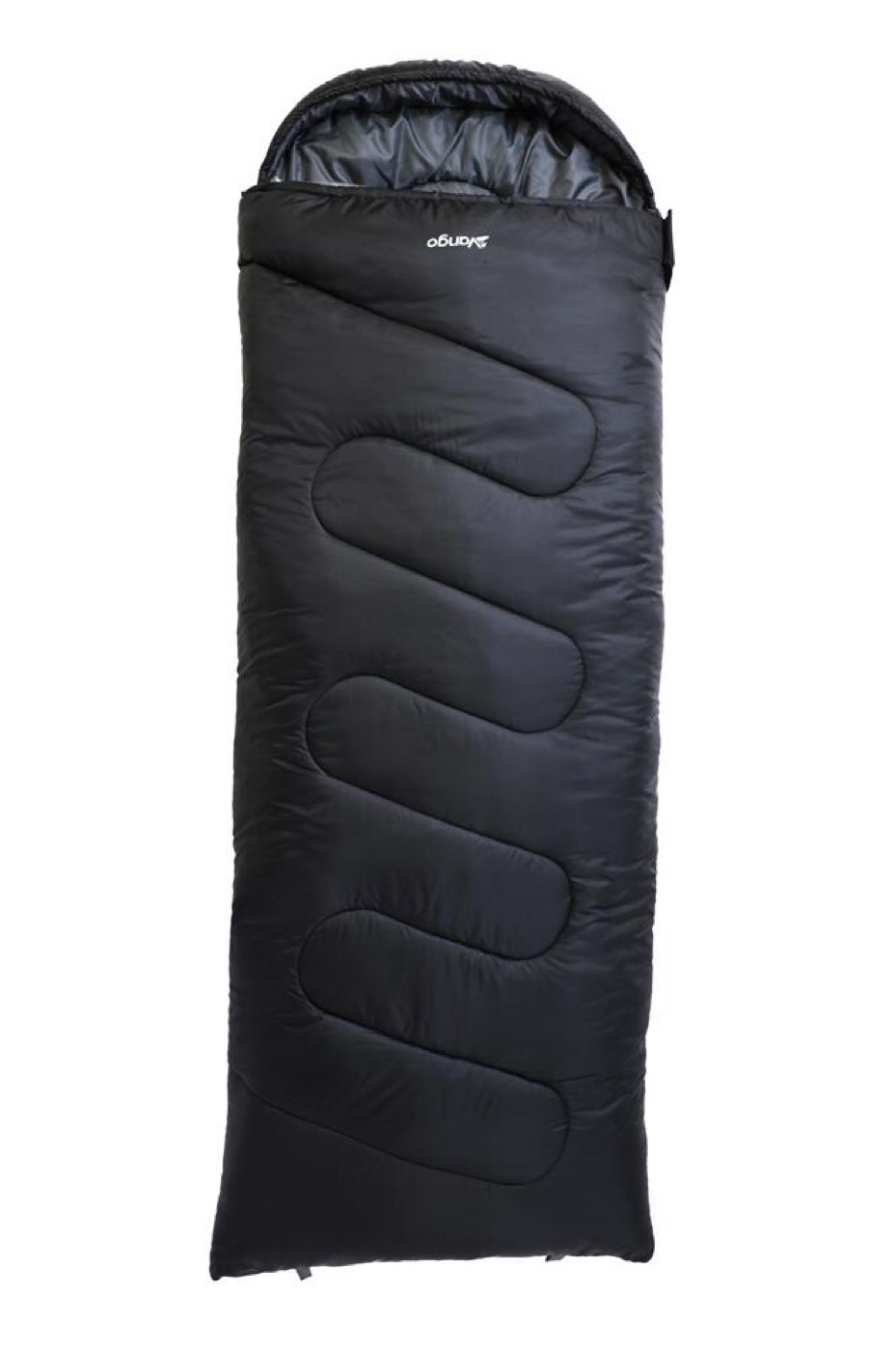
- Warmth
- Comfort +2 °C
- Weight
- 1.65 kg
- Packed size
- Not stated by maker
- Fill
- ThermoLock: 30% single-hole siliconised hollow fibre / 70%…
- Shape
- Rectangle with hood
A square-cut bag that's 78 cm wide at the chest and the feet, so you can sit cross-legged in it on the sofa or sleep on your side without fighting it. Its ISO comfort rating of +2 °C suits a cool, unheated room, and the two-way zip lets you vent your feet when it's too warm. It's also machine washable, which matters for a bag you'll use every evening.
Reasons to buy
- 78cm wide at chest and foot
- EN ISO-rated 2°C comfort / -3°C limit for about £34
- Machine washable
Reasons to avoid
- Packed size not published; quad bags are bulkier than mummies
- Few customer reviews available at UK stockists; out of stock at Vango until Feb 2027
The one we'd buy for the house: roomy, washable and one of the cheapest lab-rated bags we compare. It's bulky to pack, but that doesn't matter at home.
Best budget bag
Mountain Warehouse Summit 250
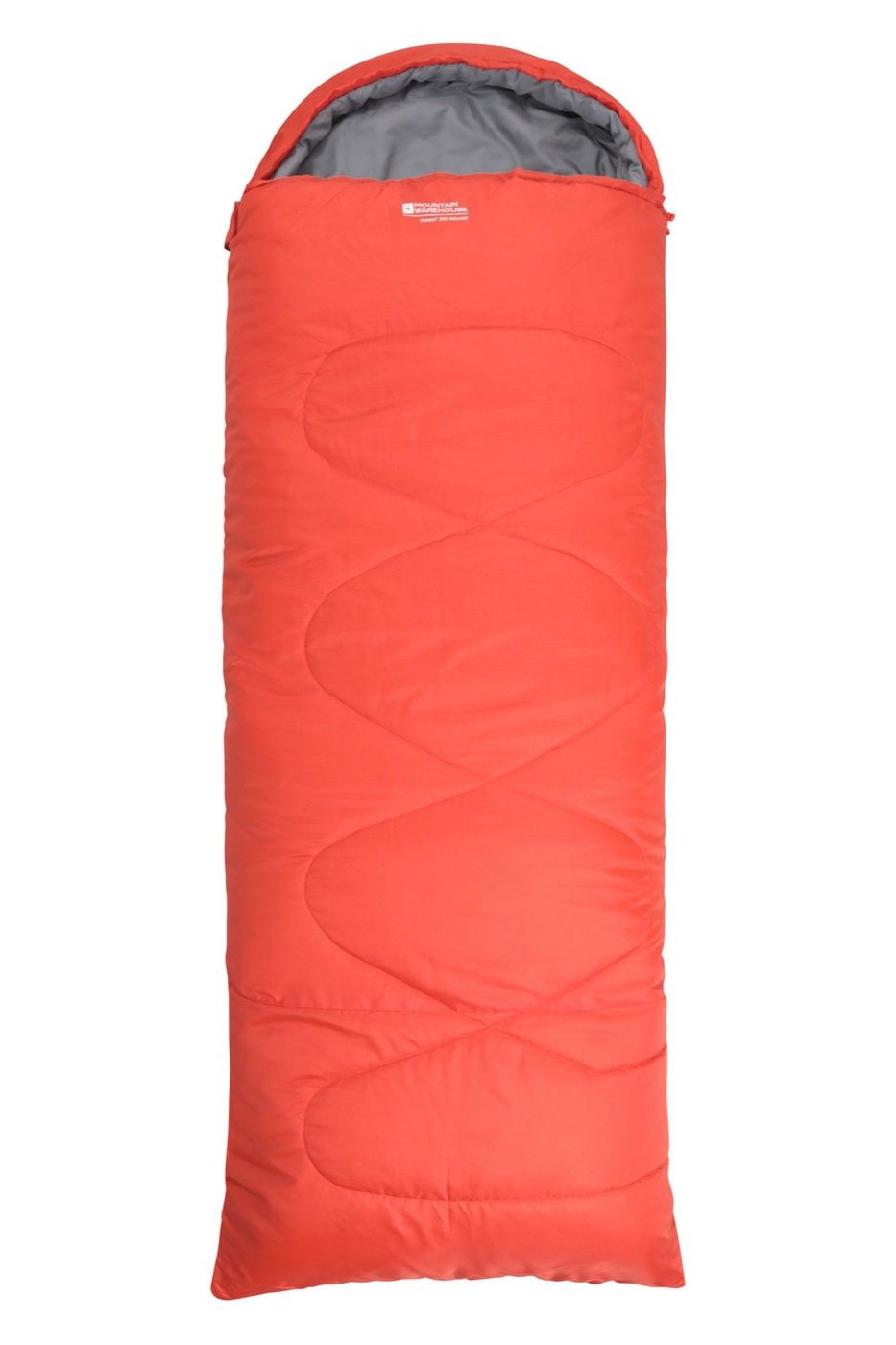
- Warmth
- Comfort +5 °C
- Weight
- 1.4 kg
- Packed size
- 23 × 36 cm
- Fill
- Hollow fibre polyester
One of the cheapest bags we list with a stated ISO comfort rating, +5 °C. That's the right warmth for a home where the heating is turned down rather than off. It comes in left- and right-zip versions, so two can be zipped together, and the envelope shape is roomy.
Reasons to buy
- Very cheap entry point with a stated EN ISO 23537-1 comfort 5°C / limit 0°C
- Roomy envelope shape and left/right zips to join two bags
- Ripstop shell and strong customer rating
Reasons to avoid
- Comfort 5°C makes it a spring/summer bag in practice; 1.4 kg and 23 x 36 cm packed is bulky for backpacking
- No independent editorial review found; temperature figures differ between MW regional sites
Ideal for adding warmth on the sofa or for a teenager's room. In a really cold, unheated house, go for something warmer.
Best for a really cold house
Decathlon Quechua Arpenaz 0 °C
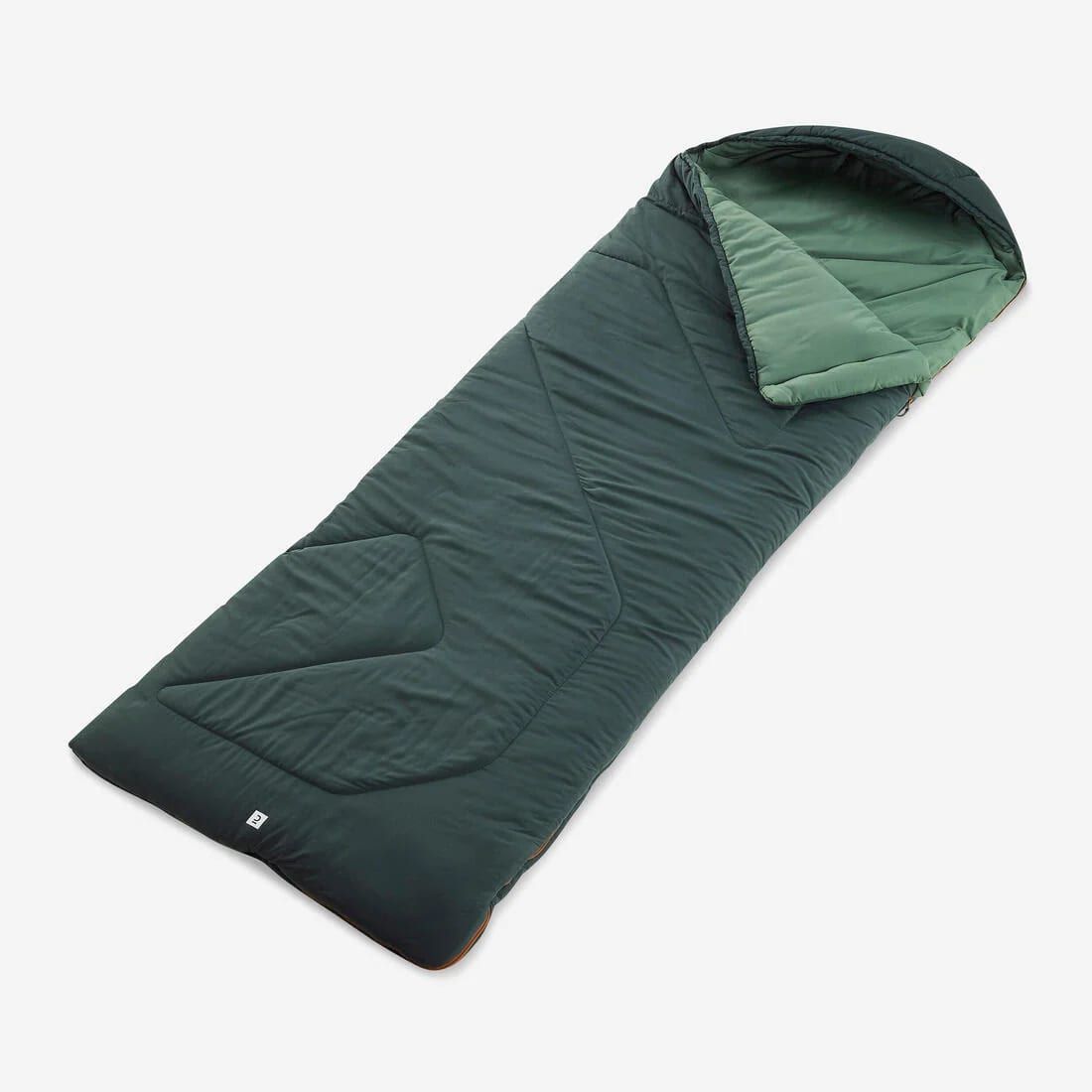
- Warmth
- Comfort 0 °C
- Weight
- 2.2 kg
- Packed size
- 29 L
- Fill
- 100% polyester wadding 350 g/m²
If your house gets properly cold, or you want one bag that will also see you through a winter power cut, the Arpenaz has an ISO comfort rating of 0 °C. It's a generous 215 × 80 cm rectangle with a hood, and the full-length zip lets it open right out as a duvet when you don't need it zipped.
Reasons to buy
- Roomy rectangular shape with hood; can twin or open as a duvet
- Warm lab rating for the price
Reasons to avoid
- Heavy and bulky - car camping only
- -9°C limit is unusually far below comfort; Decathlon US lists -5°C limit for its Arpenaz 32°F
Too warm for a heated room, but the warmest rectangular bag we'd use indoors. It's heavy, which only matters if you plan to carry it.
Best for couples and the sofa
Highlander Sleepline 250 Double
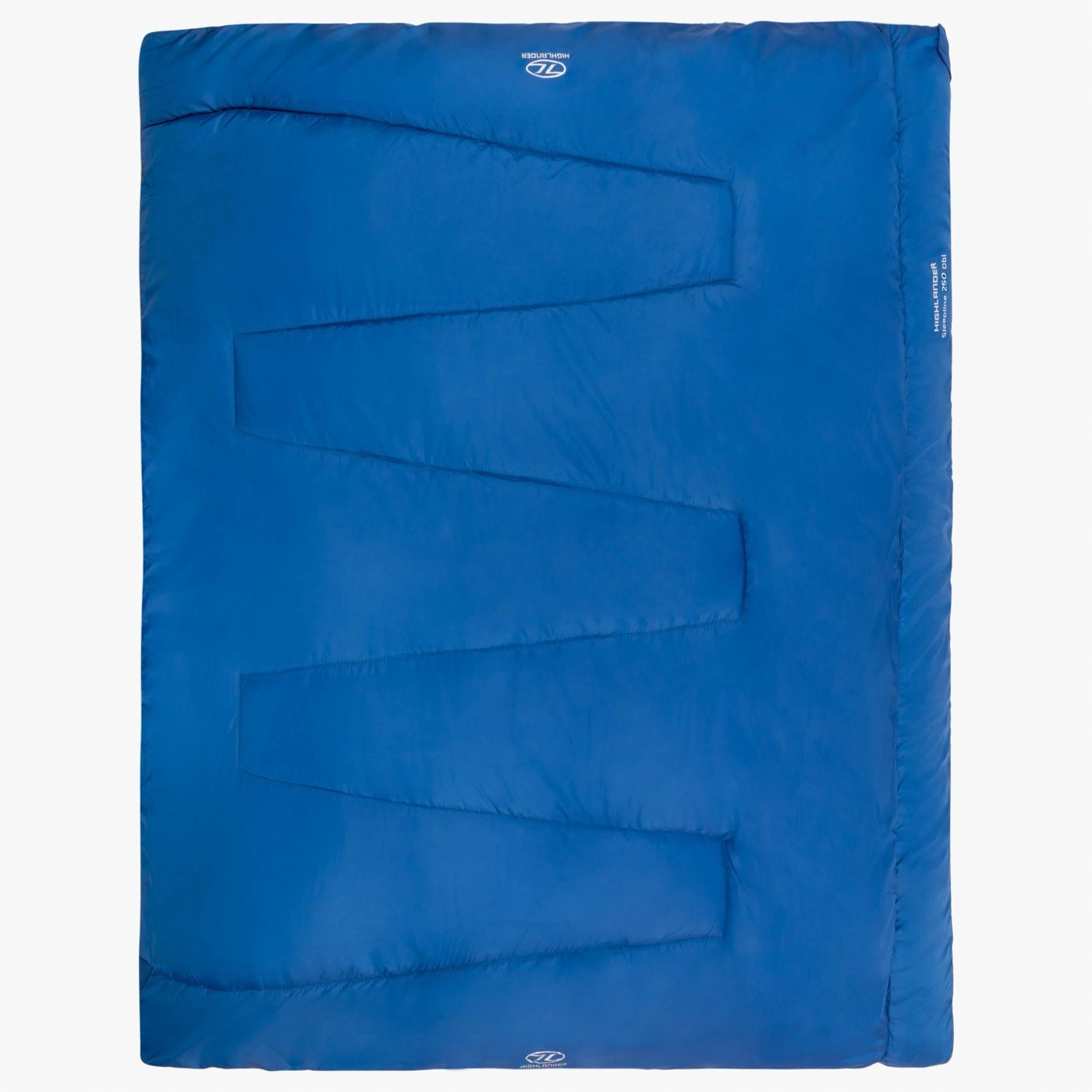
- Warmth
- Comfort +8 °C
- Weight
- 2.3 kg
- Packed size
- 48 × 29 × 29 cm
- Fill
- 250 gsm hollowfibre
- Shape
- Double rectangle
A double bag that sleeps two, or makes a big warm blanket for the sofa when you open its full-length two-way zip. Its comfort rating of +8 °C is low for camping but about right in a cool lounge or bedroom, where a warmer double would get stuffy.
Reasons to buy
- Sleeps two for about £37-40 - among the cheapest doubles from a UK brand
- Temperature figures tested to EN ISO 23537-1 per Highlander
- Full-length 2-way zip opens fully as a quilt
Reasons to avoid
- Comfort 8°C / limit 5°C: summer, festival and caravan use only
- 2.3kg and 48 x 29 x 29 cm packed; no written reviews on the maker page
A cheap way to keep two people warm without heating the room. It isn't warm enough for a cold house with the heating off.
Best if you also go camping
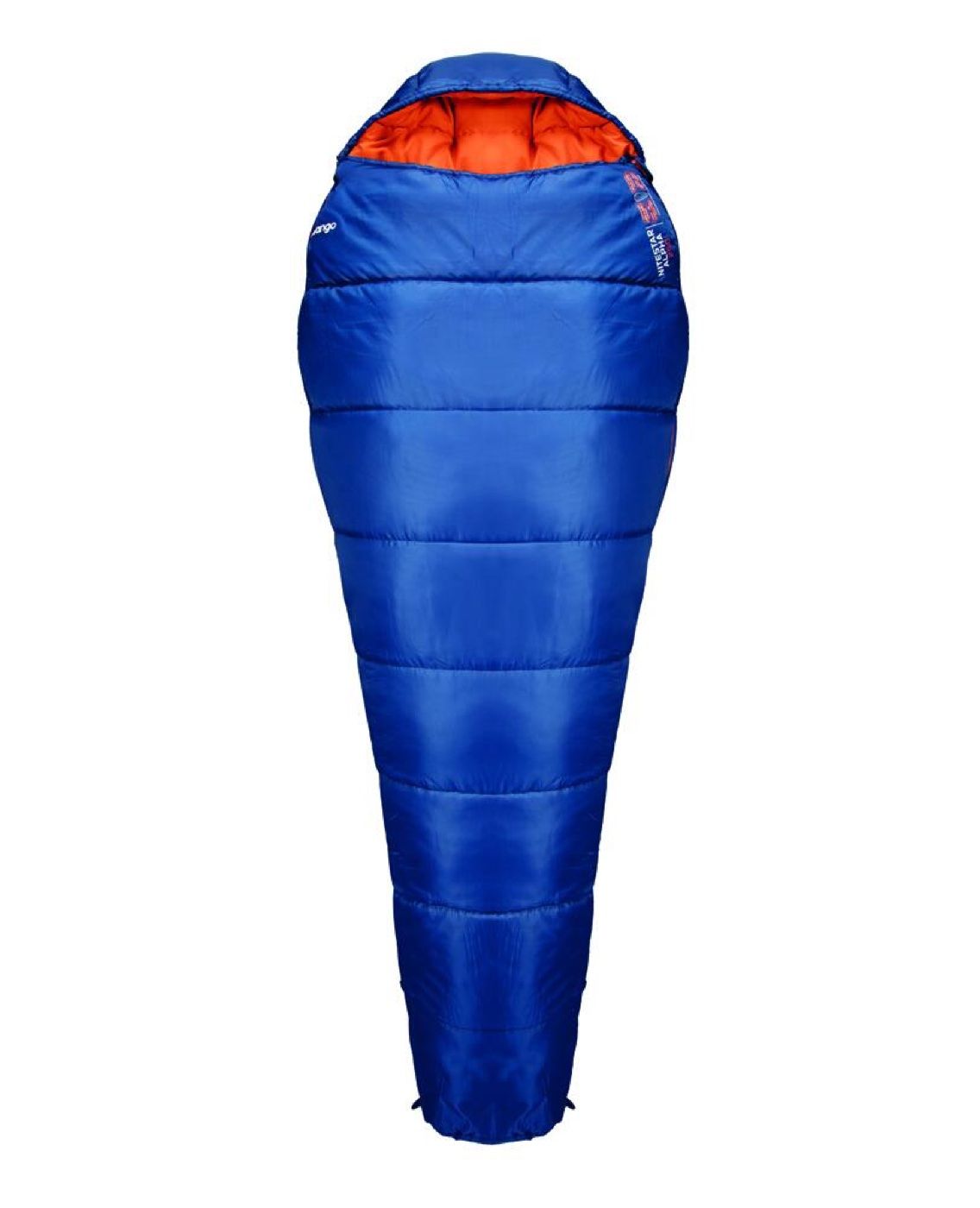
Vango Nitestar Alpha 250
- Warmth
- Comfort +2 °C
- Weight
- 1.6 kg
- Packed size
- Not stated by maker
- Fill
- Vango Insulite Alpha, offset double-layer construction
If you want one bag for home this winter and campsites next summer, the Nitestar Alpha 250 has an ISO comfort rating of +2 °C, plus a draught collar and an adjustable hood that hold the heat in. It's DofE Recommended, and there's a shorter 250S version for smaller adults and teenagers.
Reasons to buy
- Lab-tested ISO 23537 comfort 2°C / limit -4°C at a sub-£50 street price
- Retailer customer reviews praise compressibility, price/performance, draft collar and adjustable hood
- DofE Recommended and widely stocked, with a 250S short version for smaller users
Reasons to avoid
- 1.6 kg is heavy for backpacking at this warmth level
- No independent editorial review of the 250 found; only retailer customer feedback
A mummy shape, so it's snugger than our top pick on the sofa, but much better than a quad bag once you have to carry it.
| Bag | Best for | Warmth | Weight | Best price |
|---|---|---|---|---|
| Vango Atlas 350 Quad | Best overall | Comfort +2 °C | 1.65 kg | £33.99 at WM Camping |
| Mountain Warehouse Summit 250 | Best budget | Comfort +5 °C | 1.4 kg | £29.99 at Mountain Warehouse |
| Decathlon Quechua Arpenaz 0 °C | Coldest homes | Comfort 0 °C | 2.2 kg | £59.99 at Decathlon |
| Highlander Sleepline 250 Double | Couples | Comfort +8 °C | 2.3 kg | £36.92 at Wylies Outdoor World |
| Vango Nitestar Alpha 250 | Home and camping | Comfort +2 °C | 1.6 kg | £39.99 at Norwich Camping & Leisure |
Sleeping bag, wearable bag or heated throw?
Other searches for warmth at home lead to wearable sleeping bags, sleeping bag suits with arms and legs, and to heated throws and heated sleeping bags. Each has its place:
| Option | Best for | Watch out for |
|---|---|---|
| Ordinary sleeping bag | Sitting still on the sofa, sleeping | You can't walk around in it |
| Wearable sleeping bag | Moving around the house, working at a desk | Costs more than a basic bag, and the openings let warmth out |
| Heated throw | Quick warmth on the sofa | Needs a socket, costs a few pence an hour, check the cable and controller |
| Heated sleeping bag or USB heat pad | Camping with a power bank | Battery life, and most aren't needed indoors |
| Electric blanket | Warming the bed before you get in | Never use with a hot water bottle; replace old or damaged blankets |
For most people, a sleeping bag plus a hot water bottle is the cheapest option, and it works in a power cut too. If that's part of why you're buying, read our guide to the best sleeping bags for a power cut.
How to use a sleeping bag at home
Get the most warmth for the least money
- Keep your feet off the floorCold floors pull heat out of you. Sit with your feet up on the sofa, or put a folded blanket or camping mat under the bag.
- Add a hot water bottle or wheat bagPut it near your feet or tummy inside the bag, in a cover, so the bag holds the heat in.
- Wear a warm layer and socksA loose fleece and socks add warmth without squashing the filling.
- Use a linerA cotton or fleece liner keeps the bag clean and adds a little warmth. Wash the liner, not the whole bag.
- Air it every dayTurn it inside out or open it over a chair so the moisture from your body can escape.
- Heat one room, not the houseIf you do need some heat, warm the room you're in and close the door.
Frequently asked questions
Is it cheaper to sit in a sleeping bag than to put the heating on?+
Yes. A sleeping bag costs nothing to run, while a 2 kW electric heater costs about 53p an hour at the October 2026 price cap. You save the most when the bag lets you turn the heating down or heat fewer rooms. For older people and anyone with a health condition, the UK Health Security Agency advises keeping the rooms you use at 18 °C or more.
Are sleeping bags warmer than duvets?+
For the same amount of filling, usually yes, because a sleeping bag wraps right around you and stops draughts getting in at the sides and feet. A 3-season camping bag is warmer than most people need in a bedroom, so for indoors choose a comfort rating of around +2 to +10 °C, depending on how cold your room gets.
Is sleeping in a sleeping bag bad for you?+
No, not for a healthy adult. The main things to watch are overheating and moisture. Choose a bag that isn't too warm, unzip it if you start to sweat, use a washable liner and air the bag every day. Babies should never sleep in an adult sleeping bag.
Why do I sleep better in a sleeping bag?+
Many people find the snug, even warmth comforting, and a sleeping bag doesn't slip off in the night or let in cold air when you turn over. If you like it, a roomy rectangular bag gives you that feeling without the restriction of a close-fitting mummy shape.
Can I use a sleeping bag instead of a duvet every night?+
Yes. Use a washable liner as your "sheet", wash the liner weekly, and wash the bag itself every month or two following the care label. A rectangular synthetic bag with a full-length zip is the most practical for everyday use, because it opens out flat to air and dry.
What temperature rating do I need for indoors?+
Much less than for camping. In a room at 12–16 °C, a comfort rating of +2 to +5 °C is plenty. In a heated room, +8 to +10 °C is enough. Only go for 0 °C or lower if your home is unheated or you're preparing for power cuts.
Are heated sleeping bags worth it for home?+
Rarely. They're designed for camping with a power bank. At home, a normal sleeping bag with a hot water bottle or wheat bag costs less, and a heated throw costs only a few pence an hour if you want electric warmth.
Can I wash a sleeping bag in a washing machine?+
Most synthetic bags can go in a large front-loading machine on a gentle, cool wash; check the care label first. Our top pick, the Vango Atlas 350 Quad, is machine washable. Down bags need a down-specific wash and a long, low tumble dry to restore their loft.
Sources
- 1Changes to energy price cap between 1 October and 31 December 2026 (Ofgem)
- 2Summary of changes to energy price cap, 1 July to 30 September 2026, revised typical consumption values (Ofgem)
- 3Keeping warm and well: staying safe in cold weather (UK Health Security Agency, GOV.UK)
- 4Heat the human, not the home (MoneySavingExpert)
- 5Room temperature and safer sleep (The Lullaby Trust)
- 6Priority Services Register
We may earn a commission when you buy through links on this page, at no extra cost to you. It never changes what we recommend. How we test