How to compare sleeping bags: the specs that matter and the numbers that mislead
7 November 2026 · 9 min read · Prices checked 7 November 2026
How to compare sleeping bags
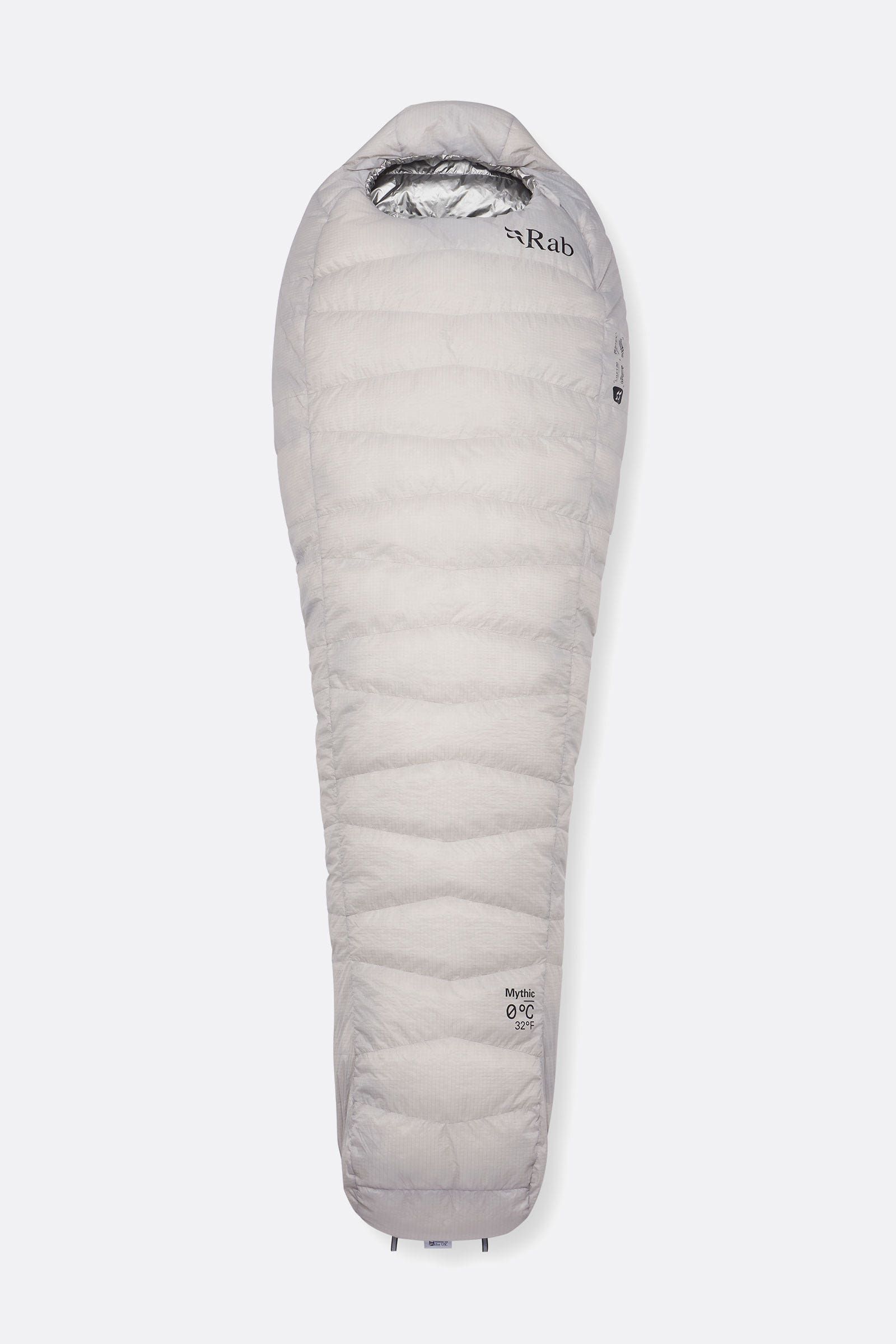
Two bags called "0 °C" can be 5 °C apart, and two bags with the same rating can differ by almost 1.4 kg. Here's how to read a sleeping bag spec sheet so you compare like with like.
Spec sheets make sleeping bags look easy to compare: a temperature, a weight, a fill power and a pack size. But brands don't all use those numbers the same way. Two bags with "0 °C" in their name can be 5 °C apart, and two bags with exactly the same lab rating can differ in weight by almost 1.4 kg. This guide shows how to compare sleeping bags like for like, using the spec sheets of the UK bags we track.
Still deciding what kind of bag you need? Start with how to choose a sleeping bag, then come back here to compare the shortlist.
How to compare sleeping bags in 6 steps
- Line up the comfort ratings. Compare the lab-tested comfort figure on every bag, never the number in the name.
- Check the rating is lab-tested. ISO 23537 and EN 13537 figures can be compared with each other. A brand's own figures can't.
- Compare weight only between bags with the same comfort rating. A warmer bag needs more fill, so it will weigh more.
- Look at fill weight, not just fill power. The amount of down sets the warmth. Its fill power mostly affects weight and pack size.
- Convert pack sizes to the same unit. Some brands give litres, some give centimetres, some give the size of the stuff sack.
- Check what each weight includes. Size and stuff sacks change the figure, so compare the same size on the same basis.
Trap 1: the number in the name
Among the bags we compare with a temperature in their name, all seven from Decathlon are named after their comfort rating. Every one from Rab and Sea to Summit is named after its limit rating, the temperature at which a man curled up is just not cold. So a Decathlon bag and a Rab bag with the same number in their names are not equally warm.
| Bag | Number in the name | Comfort | Limit |
|---|---|---|---|
| Decathlon Simond MT500 0 °C | 0 °C | 0 °C | -5 °C |
| Rab Mythic 0 °C | 0 °C | 5 °C | 0 °C |
| Rab Radeon Synthetic 0 °C | 0 °C | 5 °C | 0 °C |
| Sea to Summit Hamelin Synthetic -1 °C | -1 °C | 3 °C | -1 °C |
| Rab Neutrino -6 °C | -6 °C | 0 °C | -6 °C |
| Rab Ascent -12 °C | -12 °C | -5 °C | -12 °C |
| Sea to Summit Spark -18 °C | -18 °C | -10 °C | -18 °C |
Trap 2: ratings that aren't lab-tested
The fair way to compare warmth is a lab test. Under EN 13537, replaced by ISO 23537-1 (current edition 2022), a heated manikin is tested in a climate-controlled chamber. Every bag then gets the same three figures: comfort, for a standard woman lying relaxed; limit, for a standard man curled up; and extreme, a survival-only figure you shouldn't plan around. Because the method is the same for every brand, those figures can be lined up side by side. Other numbers can't.
| Figure | Compare it with other brands? | Example |
|---|---|---|
| ISO 23537 or EN 13537 comfort and limit | Yes | Most bags from Rab, Mountain Equipment, Decathlon and Vango |
| A brand's own rating instead of a lab test | No | Snugpak says its comfort and low-temperature figures are "given for guidance only". Its Softie 12 claims -10 °C comfort |
| A brand's extra figure alongside the lab test | No: use the lab figures | Mountain Equipment's "Good Night's Sleep" temperature: -5 °C for the Helium 400, whose ISO comfort rating is 0 °C. Alpkit's "sleep limit": -6 °C for the PipeDream 400, between its EN comfort (-4.2 °C) and limit (-10.8 °C) |
| Children's bags | No | ISO 23537-1 doesn't cover children's or babies' bags, so their figures are the brand's own |
| Expedition bags | Usually no | ISO 23537-1 covers bags with a limit of -20 °C or warmer, so the warmest bags use brand ratings |
Brand figures aren't necessarily wrong. Mountain Equipment says its Good Night's Sleep temperature is the coldest it expects the bag to be comfortable for an experienced user, and it lets you swap to a warmer bag within 30 days, paying the difference, if it isn't warm enough. But you can't put a brand figure next to an ISO figure and call it a fair comparison.
Compare weight at the same warmth
Weight only means something next to a rating. A summer bag will always beat a winter bag on the scales. So group bags by comfort rating first, then compare. Even among bags with exactly the same lab-tested comfort rating, the spread is huge:
| Comfort rating | Lightest | Heaviest | Difference |
|---|---|---|---|
| -10 °C | Sea to Summit Spark -18 °C: 1,113 g | Rab Ascent -18 °C: 1,650 g | 537 g |
| -5 °C | Rab Neutrino -12 °C: 1,070 g | Decathlon Simond MT500 -5 °C: 1,650 g | 580 g |
| 0 °C | Mountain Equipment Helium 400: 820 g | Quechua Arpenaz 0 °C: 2,200 g | 1,380 g |
| 5 °C | Rab Mythic 0 °C: 500 g | Mountain Warehouse Summit 250: 1,400 g | 900 g |
Fill type explains most of the gap. At a comfort rating of 0 °C, the three down bags we compare weigh 820 g to 930 g. The five synthetic bags weigh 1.32 kg to 2.2 kg. If weight matters, compare down with down and synthetic with synthetic, then decide whether the saving is worth the price.
Fill power vs fill weight
Fill power measures down quality: how much space an ounce of down fills, in cubic inches. Higher fill power means more loft from each gram, so the bag can be lighter and pack smaller. Fill weight is how much down is in the bag, and that sets how warm it is. Rab's own range shows it clearly:
| Bag | Fill power | Fill weight | Comfort | Total weight |
|---|---|---|---|---|
| Rab Mythic 0 °C | 900 | 187 g | 5 °C | 500 g |
| Rab Neutrino -6 °C | 800 | 400 g | 0 °C | 870 g |
| Rab Neutrino -12 °C | 800 | 600 g | -5 °C | 1,070 g |
The Mythic has the best down of the three but the least of it, so it's the least warm. Higher fill power on its own doesn't make a bag warmer. Compare fill weight between bags with similar fill power, and use the lab rating to settle it.
Check how the fill power was measured
Fill power is measured in two main ways, and the US method gives a higher number for the same down. Ultralight Outdoor Gear says 800 fill power by the EU method is about 850 by the US method. PHD says its own test reads about 4% lower than the US federal method. So an 850 bag isn't necessarily better down than an 800 bag unless both use the same method. Note that "European goose down" on a spec sheet tells you where the down comes from, not how it was measured.
Two more down details are worth comparing. Among the bags we compare that name the bird, every one at 800 fill power or higher uses goose down, and every duck down bag is 750 or lower. Some makers also give a down-to-feather ratio, such as the 90/10 duck down in the Helium 400. A higher share of down means less feather.
Synthetic bags have no fill power. Makers sometimes give the weight of the insulation sheet instead, in grams per square metre (gsm). The Quechua Arpenaz 0 °C uses 350 g/m² wadding, for example. That only compares fairly between bags using the same fibre, so the lab rating matters even more here.
Compare pack sizes in litres
Brands quote packed size as a cylinder in centimetres or as a volume in litres, and some quote it squeezed in a compression sack. To compare centimetres with litres, use π × (diameter ÷ 2)² × length ÷ 1,000:
| Bag | Maker's figure | In litres |
|---|---|---|
| Rab Mythic 0 °C | 16 × 30 cm | about 6 L |
| Rab Neutrino -6 °C | 18 × 30 cm | about 7.6 L |
| Rab Neutrino -12 °C | 20 × 35 cm | about 11 L |
| Sea to Summit Spark -18 °C | 20 L | 20 L |
| Quechua Arpenaz 0 °C | 29 L | 29 L |
Check whether each figure is for the bag's own stuff sack or for a compression sack, which can squeeze most bags smaller. Compare like with like.
Check what the weight includes
- Size. Most quoted weights are for the regular length. The Helium 400 is 820 g in regular and 870 g in long.
- Sacks. Some weights leave out the stuff and storage sacks. Ultralight Outdoor Gear lists the Sea to Summit Spark -18 °C at 1,118 g excluding its storage bags, so a bag weighed with its sack will look heavier on paper.
What the extra money buys
Once the ratings match, price mostly buys lower weight and a smaller pack, not more warmth. These five bags are all lab-rated comfortable to 0 °C. The cheapest weighs almost three times as much as the lightest. Prices are the lowest we found on 7 November 2026:
| Bag | Best for | Warmth | Weight | Best price |
|---|---|---|---|---|
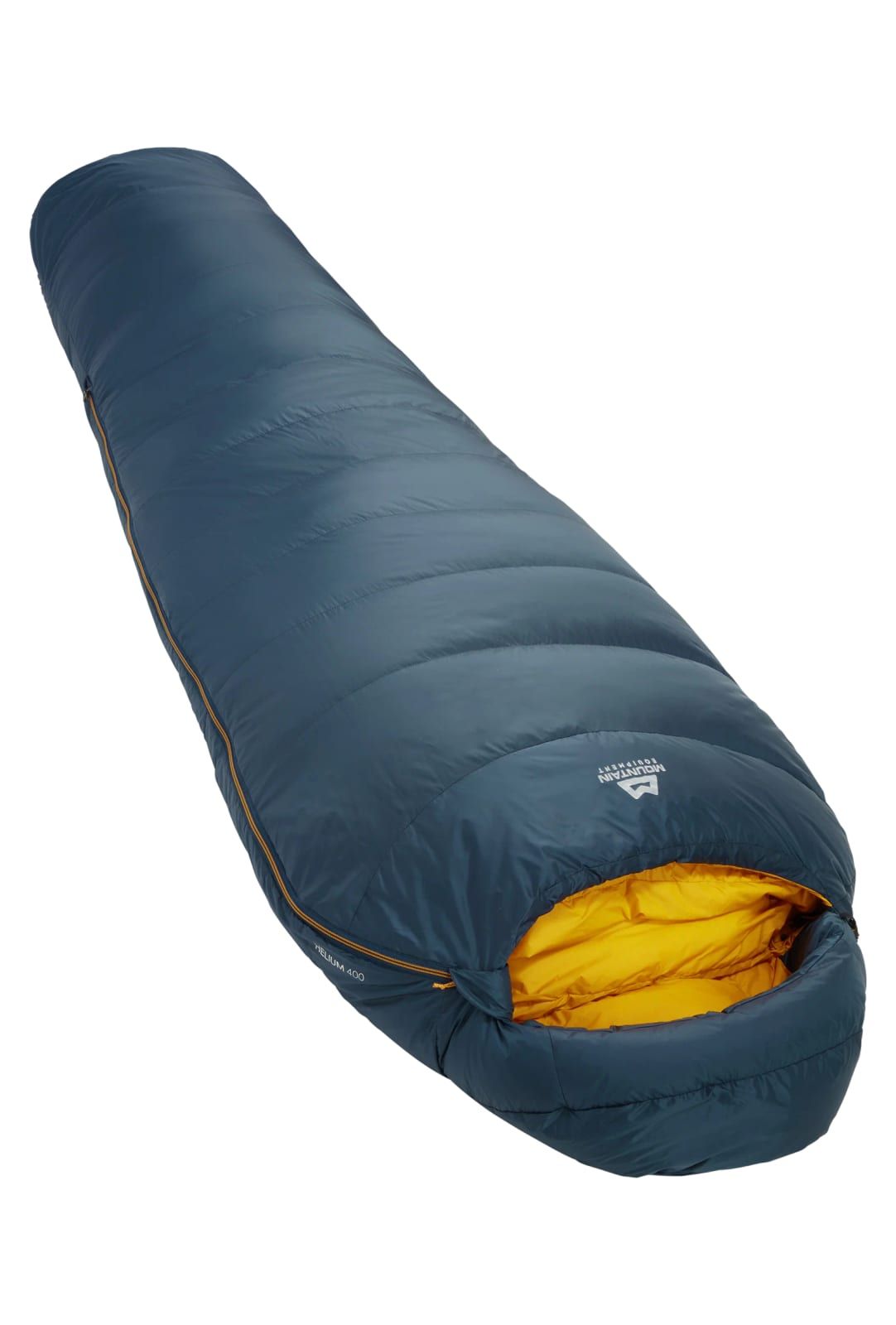 Mountain Equipment Helium 400 | Lightest | Comfort 0 °C | 820 g | £240 at Trekitt |
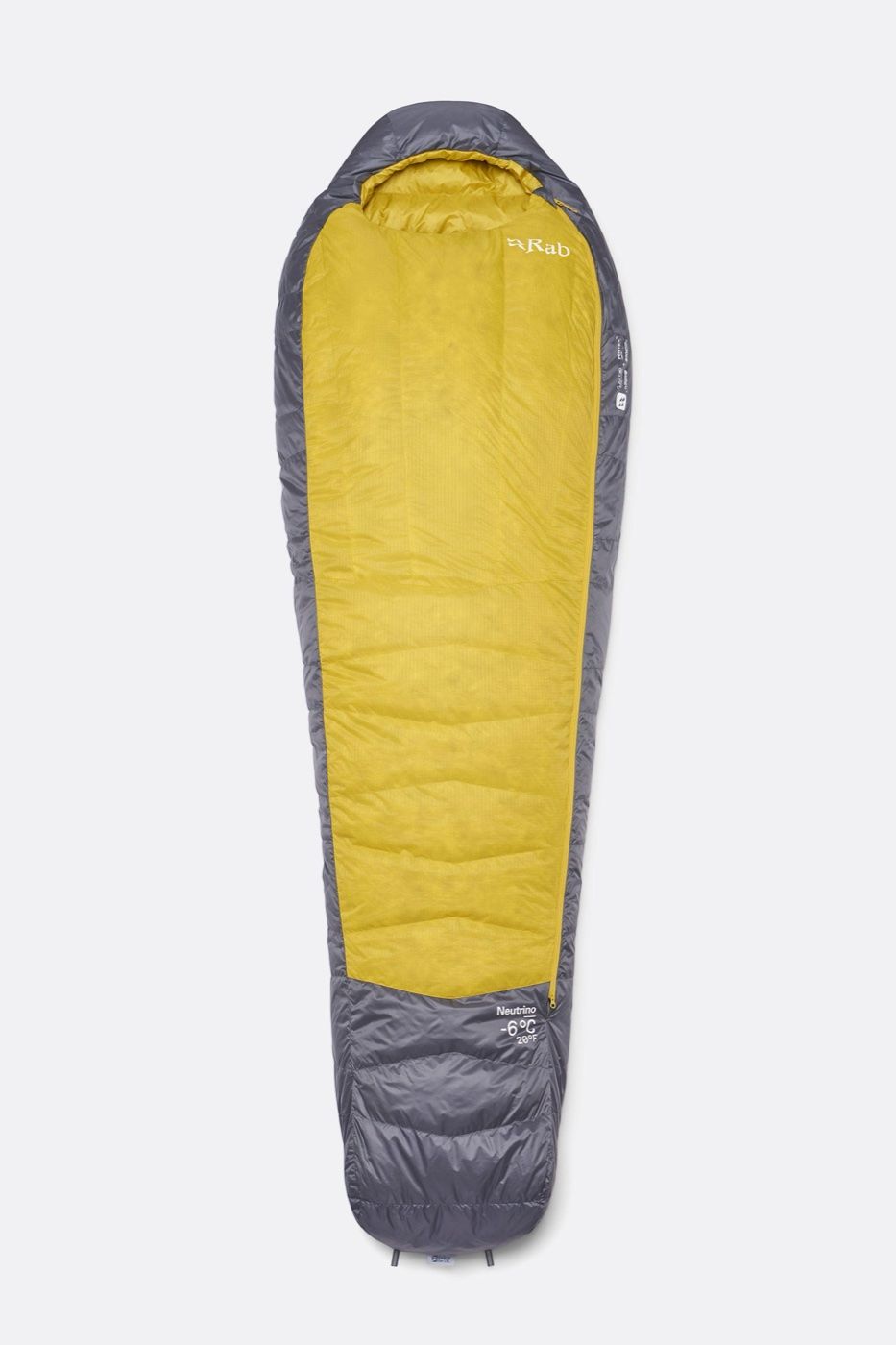 Rab Neutrino -6 °C | Goose down | Comfort 0 °C | 870 g | £375.95 at Cotswold Outdoor |
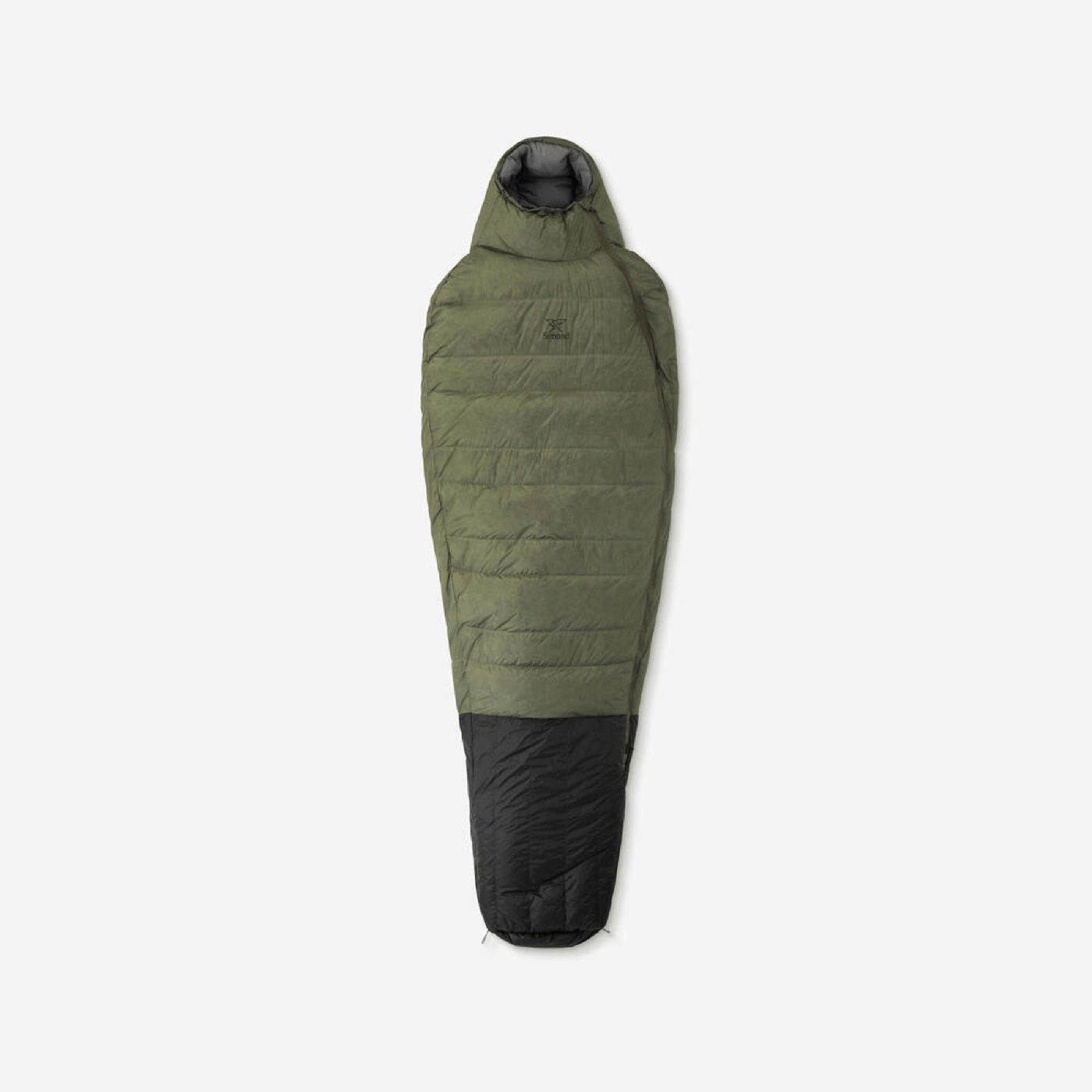 Decathlon Simond MT900 0 °C Down | Cheapest down | Comfort 0 °C | 930 g | £169.99 at Decathlon |
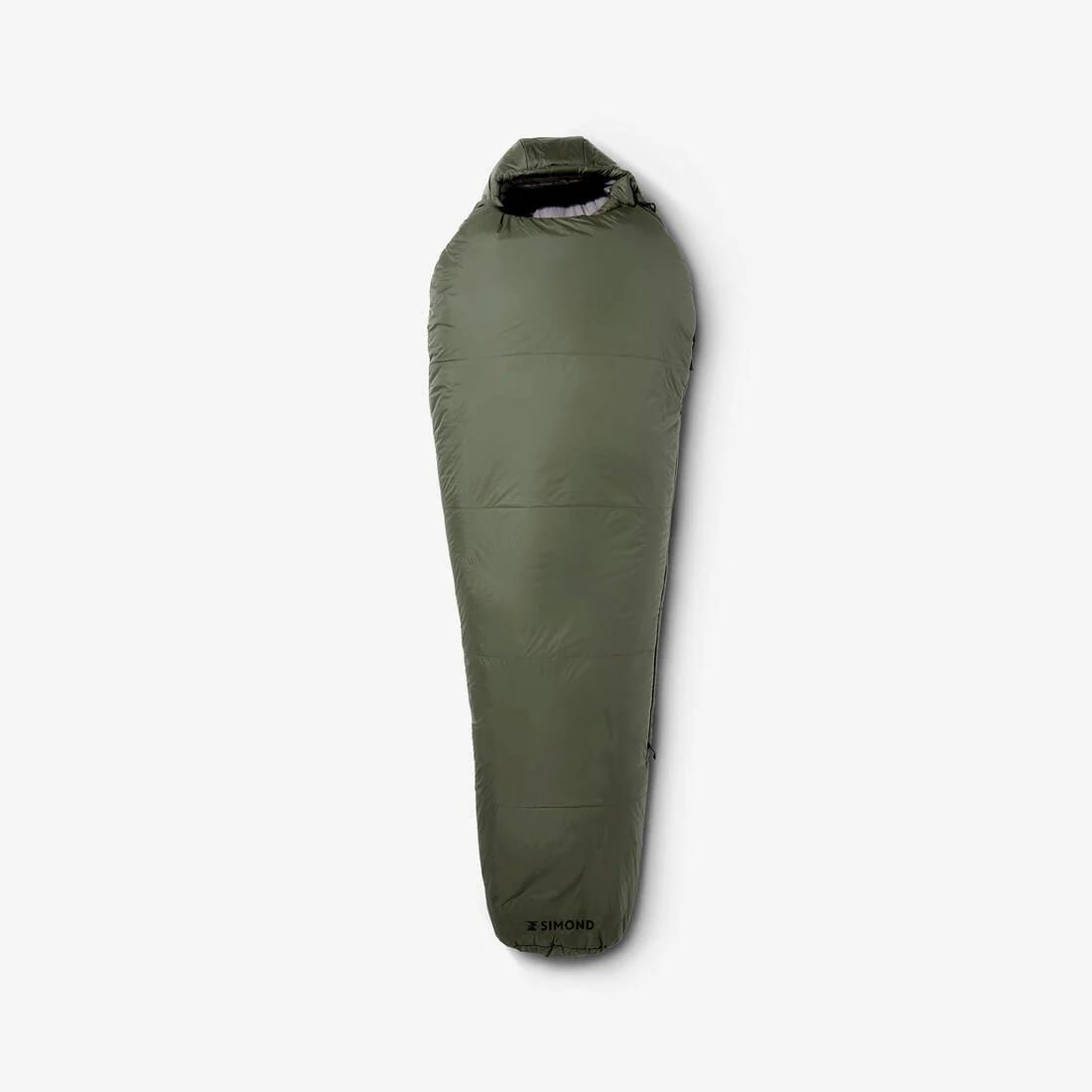 Decathlon Simond MT500 0 °C | Synthetic | Comfort 0 °C | 1.45 kg | £79.99 at Decathlon |
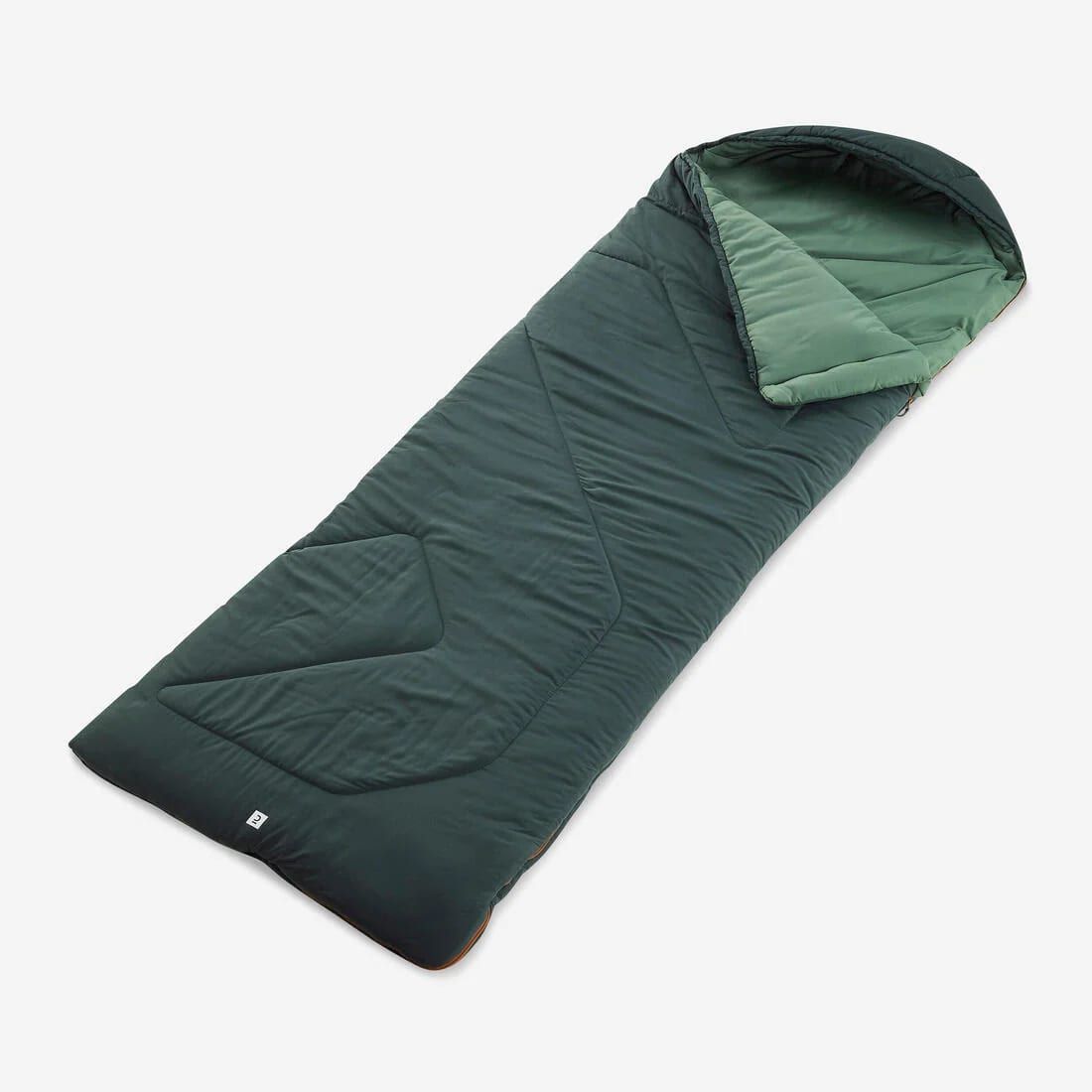 Decathlon Quechua Arpenaz 0 °C | Cheapest | Comfort 0 °C | 2.2 kg | £59.99 at Decathlon |
For car camping, the extra weight costs you nothing. For backpacking, a lighter, smaller bag is what you're paying for. The down vs synthetic section of our buying guide covers the other trade-offs, such as damp and washing.
Sleeping bag comparison checklist
- Comfort rating, not the nameRab and Sea to Summit name bags after the limit rating.
- Lab-tested figures onlyISO 23537 or EN 13537. Treat brand ratings as a guide.
- Weight at the same comfort ratingGroup the shortlist by rating before comparing weight.
- Fill weight and fill power togetherAnd check whether fill power is the EU or US figure.
- Pack size in the same unitConvert centimetres to litres, and compare sack with sack.
- Same size, same extrasRegular against regular, with or without the stuff sack.
Our comparison tables do the lining up for you: every bag shows its comfort rating, weight, pack size and the lowest UK price we found. Compare down sleeping bags, synthetic sleeping bags or winter sleeping bags, sorted by warmth, weight or price.
Compare sleeping bags side by side
Sleeping bag comparison FAQ
Frequently asked questions
How do you compare sleeping bags?+
Line up the lab-tested comfort ratings first. Then, among bags with the same rating, compare weight, pack size and price. Ignore the number in the name, which is often the limit rating.
Are sleeping bag temperature ratings accurate?+
ISO 23537 and EN 13537 ratings come from the same manikin test for every brand, so they're the fairest way to compare bags. They describe a standard sleeper, so if you feel the cold, choose a bag rated a few degrees warmer than you need.
Is higher fill power warmer?+
Not on its own. Fill power is down quality. Warmth depends mostly on how much down is in the bag. Rab's 900 fill power Mythic 0 °C has 187 g of down and is comfortable to 5 °C, while its 800 fill power Neutrino -6 °C has 400 g and is comfortable to 0 °C.
What does -5 mean on a sleeping bag?+
It depends on the brand. Decathlon names its bags after the comfort rating, so its -5 °C bag is comfortable to -5 °C. Rab and Sea to Summit use the limit rating, so their bags are comfortable at a higher temperature than the name. Check the comfort figure on the maker's page.
What is a good weight for a sleeping bag?+
It depends on the rating. Among the lab-rated bags we compare that are comfortable to 0 °C, down bags weigh 820 g to 930 g and synthetic bags 1.32 kg to 2.2 kg. For backpacking, under 1 kg at that rating is light.
Sources
- 1ISO 23537-1:2022 scope (Genorma)
- 2EN 13537 (Wikipedia)
- 3A Good Night's Sleep guaranteed (Mountain Equipment)
- 4Snugpak Softie 12 (Snugpak)
- 5Mythic Ultra 0 °C (Rab)
- 6Neutrino -6 °C (Rab)
- 7Neutrino -12 °C (Rab)
- 8Helium 400 (Mountain Equipment)
- 9Helium 400 specifications (Trekitt)
- 10Down quality: EU and US fill power (Ultralight Outdoor Gear)
- 11Testing down quality: fill power (PHD)
- 12How our sleeping bags are tested (Alpkit)
- 13Spark -18 °C (Ultralight Outdoor Gear)
We may earn a commission when you buy through links on this page, at no extra cost to you. It never changes what we recommend. How we test