Bivvy bag vs tent: which should you take, and where can you use one in the UK?
8 November 2026 · 6 min read · Prices checked 7 November 2026
Bivvy bag vs tent
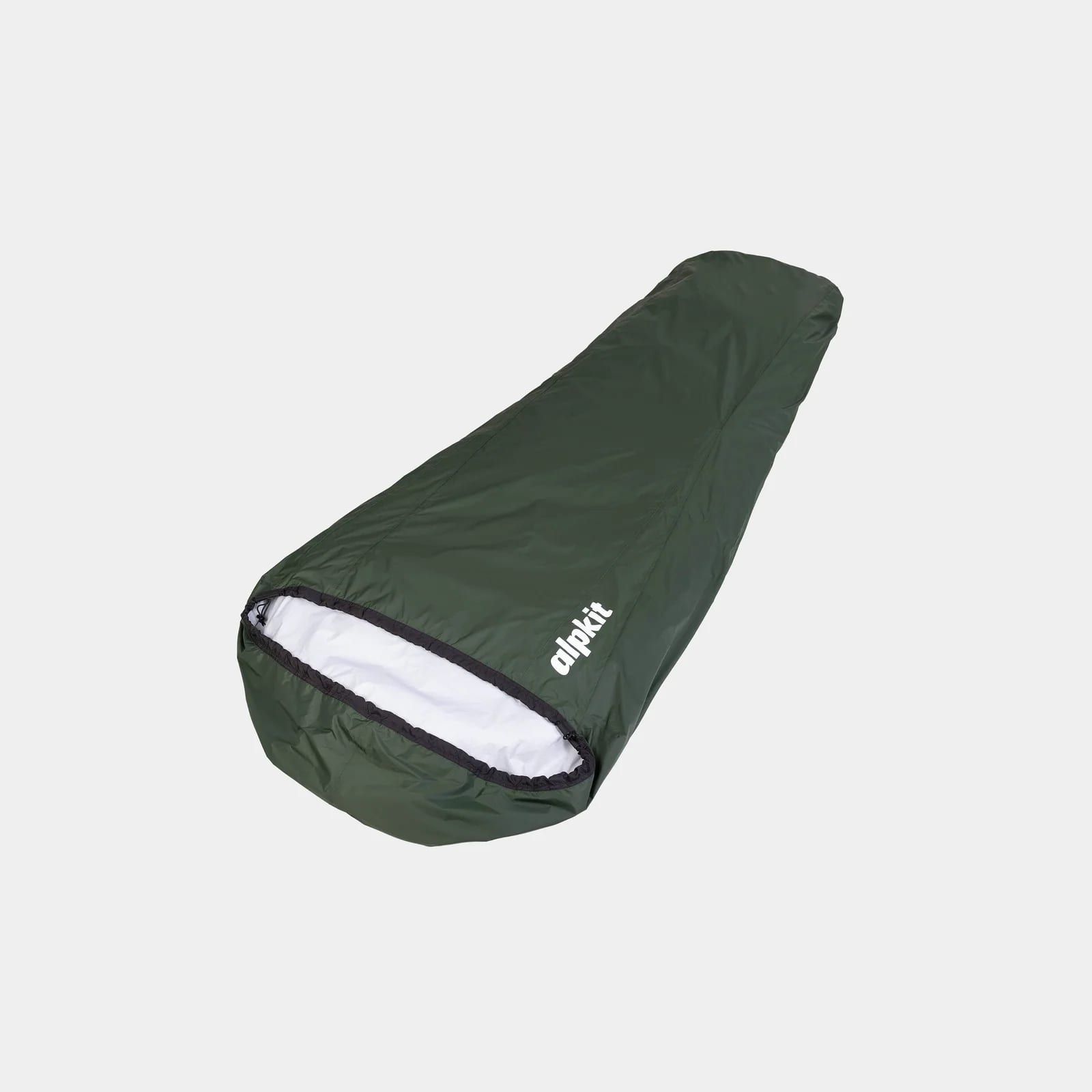
A bivvy bag weighs a fraction of a tent and fits almost anywhere, but you give up shelter and space. Here's how they compare on real kit, when each makes sense, and where you can sleep out in the UK.
A bivvy bag is a waterproof cover for your sleeping bag: you sleep in it on the ground, with no poles, pegs or flysheet. A tent gives you a roof, room to sit up and somewhere to keep your kit dry. The bivvy bags we compare weigh 236 g to 1,130 g. The two popular one-person tents we checked, the Alpkit Soloist and the Vango Nevis 100, weigh 1.2 kg and 1.7 kg. So the choice comes down to how much shelter you'll trade for less weight and a smaller pack.
Bivvy bag vs tent: the short answer
- Choose a bivvy bag for summer nights, fast and light trips, bikepacking, or as an emergency shelter on a big day in the hills.
- Choose a tent for wet weather, trips of more than a night or two, cooking under cover, or if you're new to camping.
- Choose a hooped bivvy or a bivvy with a tarp if you want something in between: a little more shelter for a little more weight.
How they compare
| Bivvy bag | One-person tent | |
|---|---|---|
| Weight | 236 g (Terra Nova Moonlite Bivvy) to 1,130 g (Snugpak Stratosphere) | 1.2 kg (Alpkit Soloist) to 1.7 kg (Vango Nevis 100) |
| Pack size | About the size of a water bottle: the Alpkit Kloke packs to 20 × 12 cm | Longer, to fit the poles: the Nevis 100 packs to 46 × 14 cm |
| Price | £24.99 to £339.99 | £96.99 (Nevis 100 at Jacksons) to £149.99 (Soloist at Alpkit) |
| Pitching | None: unroll it and get in | Vango says about 5 minutes for the Nevis 100 |
| Shelter | Your face and the opening are exposed unless it has a hood or hoop | A roof, a porch for boots and cooking, and room to sit up |
| Where it fits | Anywhere flat enough to lie down | Needs a clear patch for the whole footprint and guy lines |
Tent figures are the makers' own: the Alpkit Soloist at 1.2 kg and £149.99, and the Vango Nevis 100 at 1.7 kg total (1.49 kg trail weight), 46 × 14 cm packed, listed at £96.99 at Jacksons of Old Arley against a £135 RRP.
When a bivvy bag makes sense
- Settled weather. A dry, clear night is when a bivvy is at its best, and you get the sky instead of a flysheet.
- Carrying less. Swapping a 1.2 kg tent for the 330 g Alpkit Hunka saves about 870 g.
- Small or awkward spots. A bivvy fits on a ledge, a bothy floor or a patch of heather where a tent won't pitch.
- Bikepacking. It packs small enough for a handlebar or saddle bag.
- An emergency layer. Mountaineers and hill walkers carry one in case they're caught out overnight. For pure emergencies, a lighter emergency bivvy does the job for less.
When a tent is better
- Rain. A bivvy keeps your sleeping bag dry, but getting in and out, and keeping your kit dry, is hard in a downpour. In British weather that counts.
- More than a night or two. Room to sit up, change and cook under a porch matters more as a trip goes on.
- Midges and insects. Unless your bivvy has a bug net, a tent keeps them off far better.
- First trips. A tent is more forgiving. Try a bivvy on a fine night close to home before relying on one.
The middle ground: hooped bivvies and tarps
A hooped bivvy has a short pole at the head end that holds the fabric off your face, so it feels less closed in and you can keep the opening sheltered. The trade-off is weight: the Alpkit Elan weighs 900 g and the Snugpak Stratosphere 1,130 g, close to a light one-person tent. The Rab Ridge Raider is 890 g.
The other option is a plain bivvy bag under a tarp: the tarp keeps the rain off while you get in and out, and the bivvy keeps out spray and wind. It's lighter than most tents and gives you a dry spot to sit, but it takes practice to pitch well in wind.
Condensation: the catch with any bivvy
You breathe out moisture all night, and in a bivvy there's very little air for it to go into. Breathable fabrics let some of it out, but on cold, still nights the inside can still get damp. A few things help:
- Keep your face outside or leave the opening partly unzipped, rather than breathing inside the bag.
- Compare breathability as well as waterproofing. Makers that publish it give it as MVTR in g/m² over 24 hours: higher lets more moisture out.
- Don't over-tighten the hood on mild nights, and air the bags out in the morning.
- Waterproofing is given as hydrostatic head: the bivvy bags we compare range from 3,000 mm to 20,000 mm.
Where can you sleep out in the UK?
The rules are the same whether you use a tent or a bivvy bag.
- Scotland: the Land Reform (Scotland) Act 2003 gives a right of responsible access, and the Scottish Outdoor Access Code says this includes lightweight camping in small numbers for no more than two or three nights in one place. Byelaws restrict camping in some areas, including seasonal camping management zones in Loch Lomond & The Trossachs National Park, where you need a campsite or permit.
- England and Wales: there's no general right to wild camp. Ordnance Survey's guidance is that you need the landowner's permission, even for "just a bivvy or tarp", and that open access land doesn't usually include a right to camp overnight.
- Dartmoor: the exception in England. In May 2025 the Supreme Court ([2025] UKSC 20) upheld the public's right to wild camp on the Dartmoor Commons under the Dartmoor Commons Act 1985, subject to the National Park's byelaws. Check the National Park Authority's map of where backpack camping is allowed before you go.
Wherever you are, arrive late, leave early, keep away from buildings, roads and farm animals, and leave no trace.
Bivvy bag vs tent FAQ
Frequently asked questions
Is a bivvy bag lighter than a tent?+
Usually much lighter. The bivvy bags we compare weigh 236 g to 1,130 g, while popular one-person tents such as the Alpkit Soloist (1.2 kg) and Vango Nevis 100 (1.7 kg) weigh more. Hooped bivvies come close to a light tent.
Is a bivvy bag warmer than a tent?+
A bivvy bag isn't insulation, but it keeps wind and dew off your sleeping bag, which helps it stay warm. A tent gives more shelter from rain. Your warmth still comes from your sleeping bag and mat.
Can I use a bivvy bag instead of a tent in the UK?+
Yes, on settled nights and short trips, if you're prepared for rain and condensation. Many people pair a bivvy with a tarp for more shelter. The same wild camping rules apply as for a tent.
Is it legal to bivvy in England?+
Only with the landowner's permission, except on the Dartmoor Commons, where the Supreme Court upheld a right to wild camp in 2025, subject to byelaws. In Scotland, responsible lightweight camping is allowed under the Scottish Outdoor Access Code.
Does a sleeping mat go inside a bivvy bag?+
If the bivvy is wide enough, putting the mat inside stops you sliding off it and keeps it dry. In a narrow bivvy, the mat can go underneath. Check the bivvy's width against your mat before you buy.
Ready to choose? Compare every bivvy bag by weight, waterproofing and price, or read our pick of the best bivvy bags in the UK. You'll still need a warm enough sleeping bag to go inside.
Sources
- 1Scottish Outdoor Access Code: camping (NatureScot)
- 2Land Reform (Scotland) Act 2003, section 10
- 3Is wild camping legal in England and Wales? (Ordnance Survey)
- 4Darwall v Dartmoor National Park Authority [2025] UKSC 20 (Supreme Court)
- 5Supreme Court ruling says wild camping can continue on Dartmoor (Countryfile)
- 6Soloist (Alpkit)
- 7Vango Nevis 100 Tent (Jacksons of Old Arley)
We may earn a commission when you buy through links on this page, at no extra cost to you. It never changes what we recommend. How we test